Contact lenses: Frequently asked questions

Contact lenses are a popular option for correcting vision without prescription glasses, but they require proper care and routine check-ups. Here are the answers to some common questions about the different types of contacts, how to safely handle them, and other important factors of contact lens wear.
I'm interested in wearing contact lenses. How long does it take to get used to them?
It depends on the type of contact lenses you choose. Many people find soft contacts — hydrogel orsilicone hydrogel contact lenses — are comfortable right away. If you chooserigid gas permeable contact lenses (also called RGP or GP lenses) or hybrid lenses, it might take a couple weeks or longer for your eyes to fully adapt to the lenses. In rare cases, a person might not ever feel fully comfortable wearing contact lenses.
Checklist: ’Tis the season for eye health (PDF)
Are contact lenses difficult to care for?
There are certain steps you need to take to ensure that your eyes stay healthy and your contacts last as long as possible.
The exceptions aredaily disposable contact lenses and some extended wear contacts that are discarded every time they're removed. With these, you typically throw them out when you're done wearing them, so there's no nightly care regimen.
Can a contact lens get lost behind my eye?
No. At worst, you might have trouble finding it under your upper eyelid if you rub your eye and dislodge the lens from its proper position. If necessary, your eye doctor can help you locate and remove the lens.
How old must children be before they can wear contact lenses?
That depends on how responsible the child is. This decision is made jointly between you, your child and your child's eye doctor.
READ MORE: Contact lenses for kids
What kinds of contacts are available?
Contact lenses come in various material types, replacement schedules and wear schedules. Many wearers find disposable contact lenses and extended wear contacts are the most convenient.
Replacement schedules. Your eye doctor will inform you of the replacement schedule based on your lifestyle, health status of your eyes, and available contact lens designs.
- Reusable hydrogel and silicone hydrogel soft contact lenses are often replaced biweekly or monthly, although some have shorter or longer replacement schedules. RGP lenses can last for a year or longer if they are properly cared for.
- Daily disposable soft contacts are replaced with a new pair everyday.
Wear schedules. Daily wear contact lenses must be removed before sleep. Extended wear contacts can be worn continuously (day and night) for up to a certain number of days, often seven to 30 days, but guidance varies.
Special contact lenses. Special contact lenses include bifocal contact lenses, colored contacts, orthokeratology lenses that correct your vision while you sleep, costume contact lenses, contact lenses for astigmatism and UV-blocking contacts.
Are disposable contact lenses worth the extra money?
Daily disposable contacts allow less opportunity for protein and bacteria to build up on them. Also, if you wear daily lenses, which are discarded at the end of the day, you won't need to buycontact lens solutions to clean and disinfect them after each use.
However, the lenses themselves tend to cost more than other common types of soft contacts. Whether they're worth it for you depends on your budget and intended use.

Is there really a big difference between daily wear and extended wear contact lenses?
Yes. Extended wear contacts are made of special materials that allow more oxygen to reach your eye, which makes them safer for wear during sleep.
The FDA determines the maximum amount of time that extended wear lenses can be worn before removal. Some brands are approved for up to seven days of continuous wear; others can be worn for up to 30 days.
Where can I buy contact lenses?
After your eye doctor prescribes your contact lenses, you can order lenses from your eye doctor, at retail stores or over theinternet. Where you choose to buy contact lenses can depend on many factors, including availability, cost and service.
How can I save money?
Comparison shopping for contacts may help you save money. Try checking the current per-box prices at places like eye doctors' offices, optical retailers, retail stores with optical centers, or authorized online sellers.
My eye doctor refused to give me my contact lens prescription. Is this legal?
In the United States, the Fairness to Contact Lens Consumers Act gives American consumers the right to receive a copy of their contact lens prescription so they can purchase replacement lenses from the vendor of their choice.
The federal law requires that contact lens prescribers provide patients a copy of their contact lens prescription after a contact lens fitting. It also requires that the prescriber verify the contact lens prescription to any third party that the patient designates, such as an online merchant.
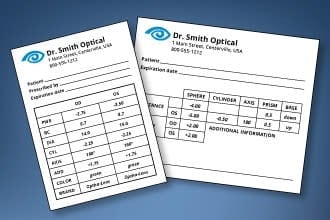
LEARN MORE: What do the numbers on youreyeglass prescription orcontact lens prescription mean?
I'm looking for a specific type of contact lens. Do you know where I can find it?
If you don't have a contact lens prescription for the lens you are interested in, you must first visit your eye doctor for an eye exam and a contact lens fitting.
This is true even if you don't need vision correction and are interested in only colored contacts or novelty (special-effect) contact lenses.
Why? The FDA considers contacts to be medical devices because you put them in your eyes; it has created these guidelines for your safety. Plus, each contact lens and each person's eyes are a little different, so the eye doctor needs to perform a specialized fitting for you. When contact lenses don't fit correctly, they can cause serious eye problems.
Can I wear contacts if I have bifocal eyeglasses?
In many cases, yes. Bifocal (multifocal) contact lenses andmonovision are two possible options.
Why did my eye doctor tell me to come back after they already fitted me with my contacts?
If your eye doctor asked you to come back about a week later, it's often because they want to be sure that you're not having any problems, such as contact lens-related dry eye or eye irritation.
If it's about a year later, it's likely for an annual eye exam to check whether your prescription has changed and to check for any eye diseases, which are important to diagnose and treat as early as possible.
How many people wear contact lenses in the United States?
According to the most recent data published by the U.S. Centers for Disease Control and Prevention (CDC), an estimated 45 million Americans wear contact lenses.
Stated another way, about one in every seven to eight people in the United States wears contact lenses.