What's New in Eyeglass Lenses
New Progressive Lenses Provide
Sharp Vision in Low-Light Conditions
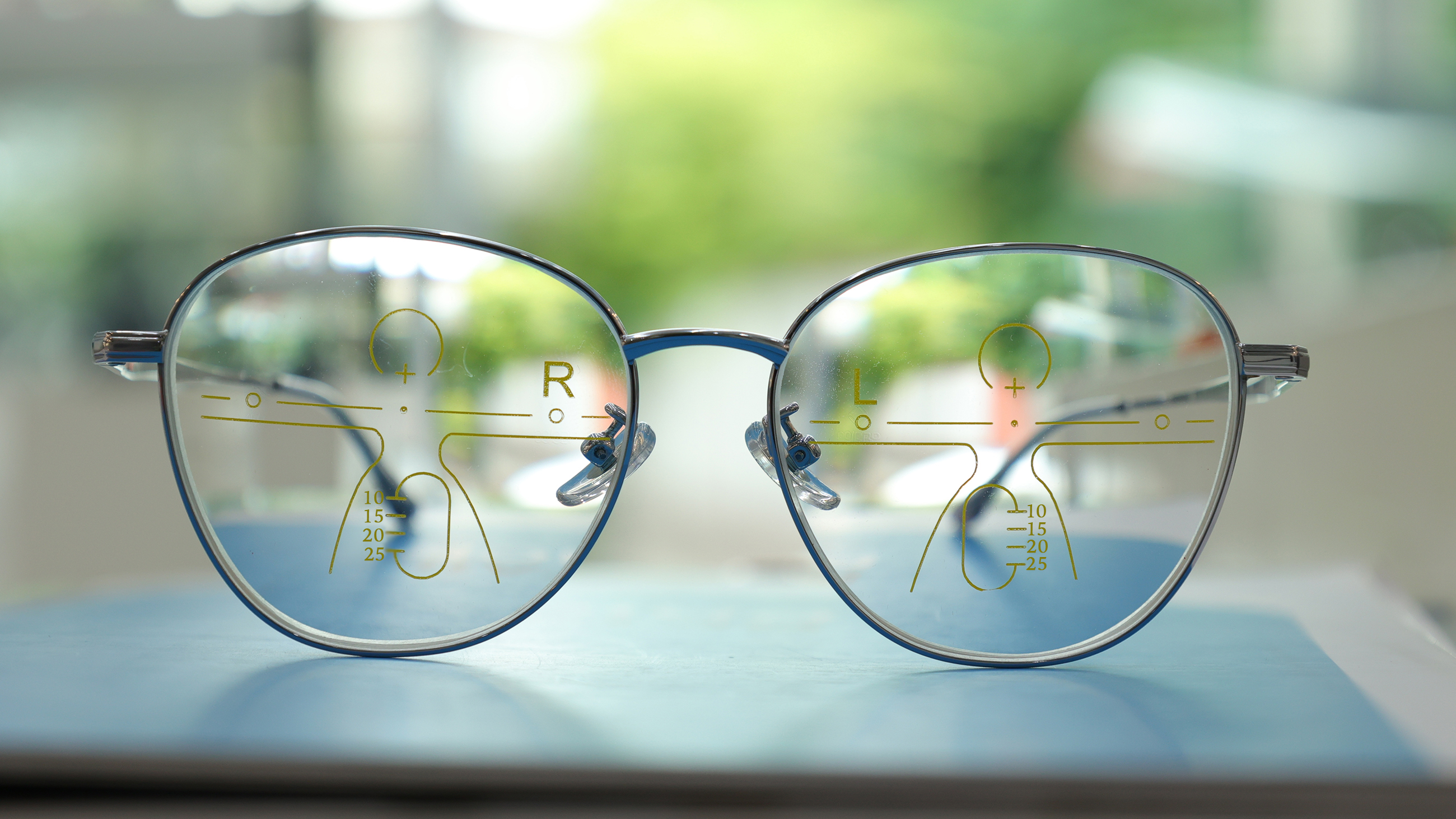
DALLAS, February 2010 Essilor of America has just released Varilux Physio Enhanced lenses, the company's most advanced progressive lenses to-date.
The lenses are designed with WAVE Technology 2 to provide sharp vision at any distance and light condition.
WAVE Technology 2 addresses four factors that can reduce sharpness: variation in pupil size, patient prescription, light conditions and viewing distance.

These distortions can lead to eye strain for the lens wearer.
The lens design manages these distortions to preserve 93 percent of image sharpness in even low-light conditions.
According to the company, these new lenses are the best in the industry for minimizing distortions.
Varilux Physio Enhanced lenses are dual-sided digitally surfaced and offer wider fields of vision than Varilux Physio lenses.
Shamir Releases Ultra Wrap for Wraparound Frames
SAN DIEGO, February 2010 Shamir has introduced Ultra Wrap to its SuperLite 1.60 and SuperLite 1.67 lens material lines. With a redesigned back curve, Ultra Wrap accommodates a wider range of nearsighted and farsighted prescriptions for wraparound frames.
The high index lens material can be used for single vision or progressive lenses, such as the company's Autograph II. It is available in both clear and Transitions lenses.
According to Shamir, it was the first company to create a progressive lens designed specifically for wrap frames. The expanded prescription range of Ultra Wrap means more people can wear wrap frames.
Shamir lenses are available at optical stores nationwide.
Ice-Tech Introduces Thin-Tech Prescription Lenses
for Wraparound Sunglasses
ATLANTIC BEACH, Fla., January 2010 Wraparound sunglass frames have long posed a problem for prescription lens manufacturers: How do you make a corrective lens that is highly curved, yet provides good vision without distortion and bulk?

According to the Ice-Tech people, they've figured it out, using a patents-pending digital process to make a thin sunglass lens with reliable optics in a wide field of view.
One goal of the Ice-Tech research team was to reduce the weight of the lenses, in some cases by up to 50 percent. In one test, for a farsighted prescription of +4.00 diopters, a conventional lens weighed 19.7 grams, with a center thickness of 9.5mm. For the same prescription, the Thin-Tech lens weighed 12 grams, with a center thickness of only 6.2mm. A benefit for nearsighted wearers is the reduced edge thickness at the temples.
Thin-Tech lenses can accept mirror and anti-reflective coatings, too. You can order Thin-Tech sunglass lenses from optical stores nationwide.
Shamir Debuts SuperLite 1.74 Thin Lens Material
SAN DIEGO, January 2010 Fans of thin lenses will appreciate this new high index lens material from Shamir. Called SuperLite 1.74, the material can be used in several Shamir single vision and progressive lens designs, including the Autograph line of progressive lenses.
The idea behind high index lens materials is that they are optically denser, providing more vision correction with less lens material. So even if you have a high prescription, you can enjoy thinner, lighter lenses.
Shamir is well known in the optical community for high-quality lens materials and designs, especially in progressive lenses for presbyopia. Shamir lenses are available at optical stores nationwide.
iZon Wavefront-Guided Lenses Now Available
in Transitions Photochromic Tint
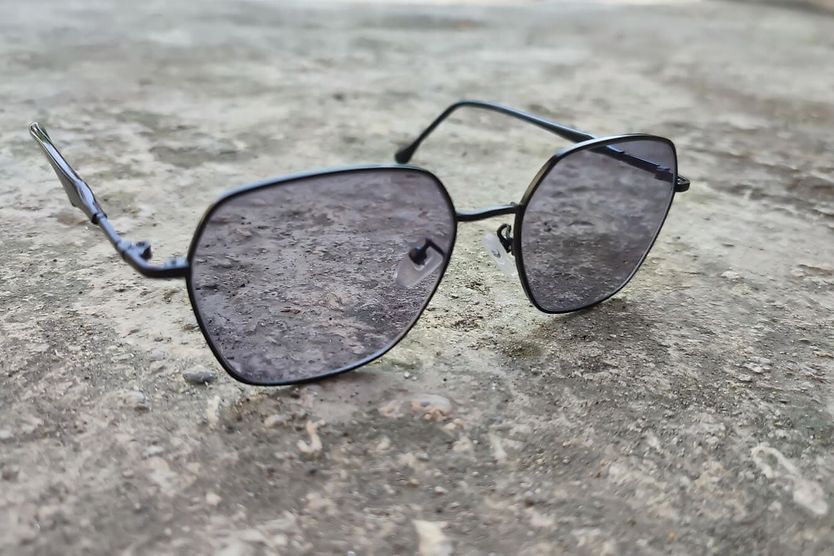
VISTA, Calif., October 2009 iZon SL Lenses in Transitions VI have a UV light-activated (photochromic) tint that make them convenient for many situations, such as shopping and travel, when you don't want to carry around both eyeglasses and sunglasses.
As with all iZon lenses, the new version in Transitions VI is made to your optical fingerprint, to reduce or eliminate the higher-order aberrations that can cause vision problems in low light and reduced contrast conditions, as well as halos and starbursts surrounding lights.
iZon SL Lenses in Transitions VI have a scratch-resistant coating, as well as anti-reflective and moisture-resistant coatings. They come in gray and brown tints and can be used in single vision and progressive addition lens prescriptions.
Self-Adjustable Glasses Let You Fine-Tune Your Vision for All Situations
VAN NUYS, Calif., September 2009 If you've ever used binoculars, it may have struck you that one of their advantages is the ability to focus the lenses as needed.
Now the same feature is built into new eyeglasses called TruFocals.
By adjusting a slider on the bridge of the eyeglass frame, you can change your focus from near to intermediate to far, and back again. And you can fine-tune the focus to overcome slight changes in your prescription that may have occurred since your last eye exam.
TruFocals were designed especially for the needs of people with presbyopia, the age-related reduction in near-focusing ability.
Instead of switching from reading glasses to distance glasses and back again, with TruFocals you can wear one pair of glasses that provides the right lens power for your needs all day long.
According to the company, they overcome problems of distortion and limited areas of focus that occur with traditional bifocal lenses as well as progressive lenses. For example, you don't have to move your head or your eyes to focus on your reading material, as you would with bifocals. You just move the slider.
How do they work? TruFocals are composed of an outer hard lens that is created to your existing eyeglass prescription and an inner flexible lens that contains fluid. As you move the slider, it pushes the fluid to change the shape of the flexible lens, which changes the power of the lens.
Besides the regular lenses, you can also get contrast-enhancing lenses, as well as glare-reducing tinted lenses to use outdoors.
You can order TruFocals through participating eye doctors or by visiting the company's website. You do need a prescription that is less than a year old, to ensure that the lenses will work for you during the full life of your prescription.
Please click here for closeup photos.
Improved Definity Progressive Lenses Now in Durable Trivex Material
DALLAS, July 2009 Definity progressive lenses now come in the shatter-resistant Trivex material. Trivex is a mid-index plastic that is similar to polycarbonate in its lightweight durability.
Manufacturer Essilor of America says the new version of Definity has improved design symmetry for a wider view of distant scenes, better alignment to see wider in the intermediate range and inset variation to see wider close up.
The lenses come in clear, as well as Transitions VI photochromic gray or brown.
Improve Your Golf Game in Varying Light Conditions
PALM HARBOR, Fla., June 2009 If you're a golfer who wears multifocal lenses, new Definity Fairway Transitions SolFx lenses were designed to meet your needs, whether you're in the sun or the shade.

In sun or shade, Definity Fairway Transitions SolFx lenses (left) are designed to improve contrast no matter the light conditions.
Definity lenses by Essilor of America have a multifocal design with Dual Add 2.0 Technology, which creates a fourth zone of vision for clearer vision when you look down.
In a study, golfers preferred Definity lenses by seven to one during course play. They reported less peripheral distortion, a 30 percent wider intermediate zone and smoother transitions between distance, intermediate and near vision zones.
Essilor has paired the Definity lens with the SolFx sunglass technology by Transitions Optical. The sun-activated lenses adjust their degree of darkness to variable outdoor light conditions automatically, changing from amber to a darker brown and back again, as the light changes.
Contrast and depth perception improve, according to the company, so you can see the ball and the contour of the greens better.
Definity Fairway Transitions SolFx lenses also protect eyes against UV rays and come with Crizal Sun Mirror coatings to reduce back-side reflections and improve scratch resistance and cleanability.
Please click here to see a comparison with other sunglass lenses.
New Crizal Sun Lenses With Scotchgard Protector
DALLAS, April 2009 Newly released Crizal Sun lenses with Scotchgard Protector provide freedom from annoying scratches and smudges, for optimal clarity.
The scratch-resistant layer has a slippery surface to reduce grease, dirt, smudges and water adhesion. A super-hydrophobic top coat allows for easy cleaning on both sides of the lenses; and a double-sided hard coat with glass-like silica particles heightens durability of the lenses.
Crizal Sun uses an anti-reflective technology on the backside of the lens to eliminate glare, reducing eye strain and discomfort. This is particularly important in bright environments where water, snow, sand and pavement may be present. The anti-reflective technology is not applied to the front side of the lens, so there is no undesirable color change. The lens coating technology also prevents peeling and fading over time.
Multifocal Lenses Enhance Intermediate Range
ROANOKE, Va., October 2008 PixelOptics has incorporated an extra intermediate zone in new multifocal lenses that could aid computer users.
Power distribution in atLast! Enhanced Multifocals.
The lenses, atLast! Enhanced Multifocals, contain four zones for seeing at near, intermediate (18-20 inches), far-intermediate (29 inches to 5 feet) and distance ranges.
"We're confident atLast! will prove an excellent choice for computer users and serve as a second pair for progressive wearers seeking a lens that better meets the demand for intermediate vision," said Bill Spies, chief operating officer for PixelOptics.
Company officials say the lens is designed to eliminate obvious segment lines between zones, found in conventional bifocals and trifocals.
Gunnar Computer Lenses Designed To Reduce Eye Strain
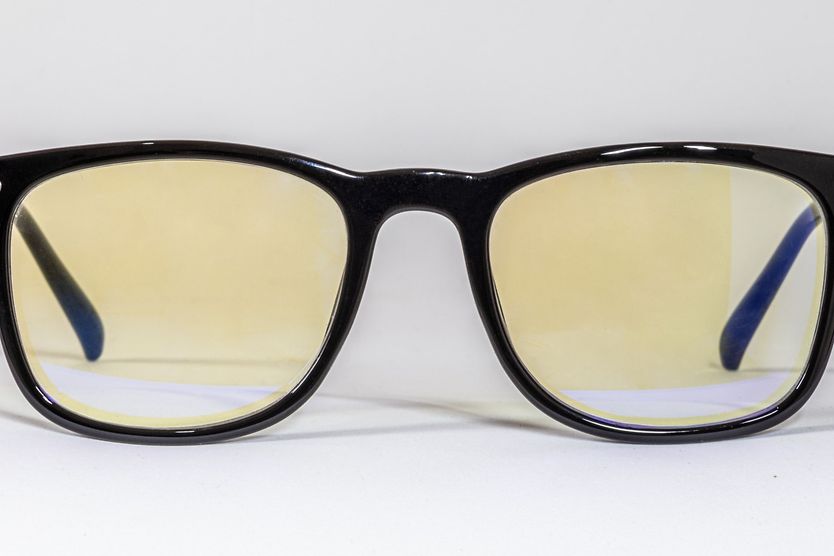
SAN DIEGO, October 2008 Non-prescription lenses by Gunnar Optiks include uniquely designed yellow tinting and anti-reflective coatings to reduce glare, ease eye muscle strain and create maximum comfort for computer users.
Gunnar's new i-AMP lens technology is incorporated into wraparound frames, to help maintain a more humid environment to moisten dry eyes common among computer users. Fifteen Gunnar styles come in four different collections, including the Sphere, Catalyst, Metallic and Attache.

The lenses are designed geometrically to intercept light rays entering the eye and optimize focusing ability.
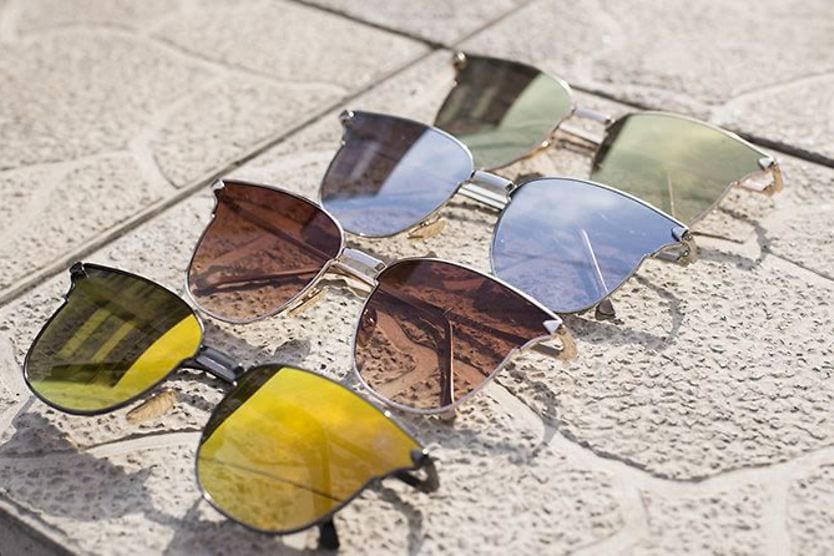
According to Gunnar, yellow tinting helps reduce glare and eye fatigue, another common symptom of computer vision syndrome.
The lenses also optimize light transmission in environments such as offices, where harsh, fluorescent lighting is common.
Click here for a larger photo.
Eyeglass and Contact Lens Prescriptions Can Now Be Automated
ROCKVILLE, Md., May 2008 Researchers say prescriptions for contact lenses and eyeglasses now can automatically and more precisely be determined with aberrometers.
These are instruments that produce wavefront measurements that can detect normal vision errors as well as abnormalities known as higher order aberrations (HOAs). Just as normal vision errors affect how the eye sees, so do HOAs.
Traditional eye exams usually aim to provide prescriptions for eyeglasses or contact lenses that can correct well known refractive errors such as nearsightedness, farsightedness and astigmatism.
A study reported in the Journal of Vision says a new model has been developed that can accurately and more precisely predict how prescriptions should be calculated to provide corrective lenses based on wavefront analysis of both normal refractive errors and HOAs.
The study by NASA Ames Research Center scientists also demonstrates that the new model for predicting vision correction outcomes based on wavefront analysis can be used for better accuracy in LASIK and other corrective vision surgery.
Outfitter 24 Safety Glasses Change Color Automatically
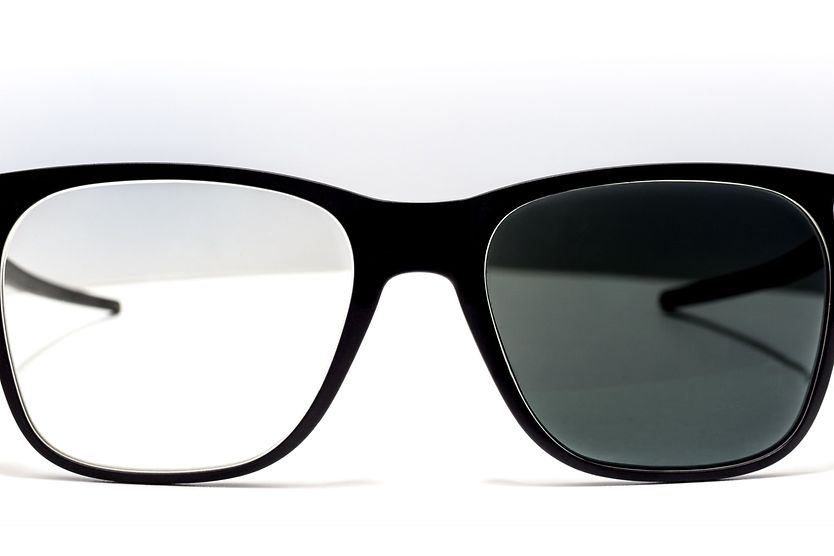
BYRON CENTER, Mich., December 2007 Global Vision has introduced Outfitter 24 Safety Glasses, with anti-fog lenses that change tint from yellow to smoke while automatically adjusting to daylight or dark conditions.
Company officials say new photochromic technology provides darker shading than what is ordinarily available in polycarbonate, shatterproof lenses.
When the lens automatically lightens to yellow in darker conditions, the color provides improved depth perception, particularly on overcast days.
Outfitter 24 Safety Glasses can be worn over most regular prescription eyeglasses. Click here for a closeup photo.
Blue-Blocking Lenses May Improve Sleep
CLEVELAND, November 2007 John Carroll University scientists in Cleveland have developed eyeglass lenses that block blue light as an aid for people who have difficulty falling asleep or sleeping through the night.
Researchers say sleep patterns are improved when people wear special glasses for a few hours before bedtime to block blue light rays, which delay melatonin production.
Melatonin is a hormone that helps induce sleep as part of the body's circadian rhythm or natural "biological clock."
Researchers also say blue-blocking glasses that help induce good sleep patterns have been shown to reduce symptoms of attention-deficit hyperactivity disorder (ADHD). Click here for a larger photo.
Coppertone Sunglasses Scheduled for Release in Early 2008
RAMSEY, Minn., October 2007 Look for a February 2008 release of polarized sunglasses with the famous Coppertone brand name now associated with sun protection products for the skin.
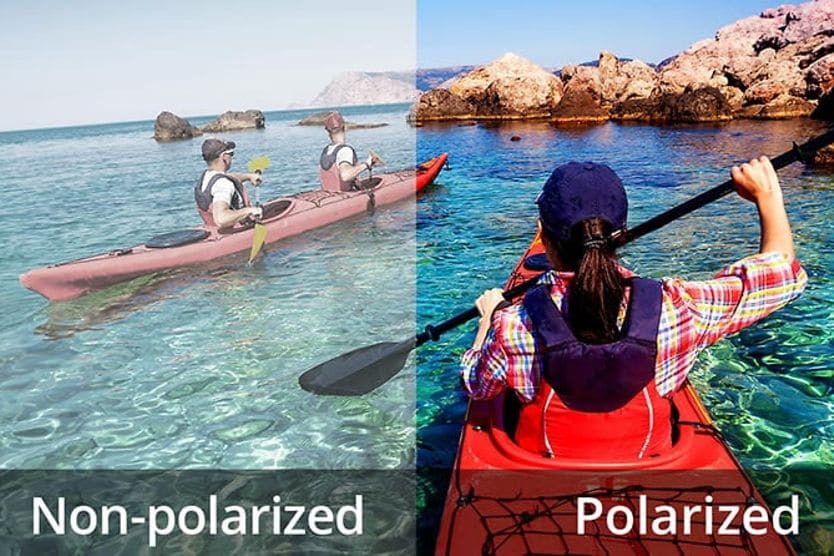
The Coppertone brand will be teamed with the Vision-Ease Lens company's patented polarized sun lens technology that helps protect against high energy visible (HEV) light rays or "blue light." The polycarbonate lenses also will provide 100 percent protection against ultraviolet (UV) light and 97 percent protection from reflected glare.
Company officials say HEV light exposure may be associated with development of macular degeneration, a potentially blinding eye disease that affects many older Americans.
The Coppertone sunglass lenses, which also can be ordered as bifocals, will be available in brown or gray colors. Click here for a photo.
"Smart" Lenses Adapt by Changing Both Shade and Color
SEATTLE, March 2007 University of Washington researchers say they have developed adjustable "smart" lenses that can change shading or coloring in varying conditions.


Experimental laboratory versions of new "smart lenses" some day may be converted to fashionable sunglasses that wearers can adjust to change both color and shading. (Photo courtesy of Chunye Xu, University of Washington)
"These lenses are more active, more intelligent, than today's sunglasses," said mechanical engineering research assistant professor Chunye Xu. "But because of the materials we're using, we don't think the price is going to be very different."
Researchers use electrochromic materials that enable changes in shading and color based on variations in electrical currents. While photochromic lenses change shading automatically in light or dark conditions, wearers of electrochromic lenses can make their own adjustments. Changes within the electrochromic lenses take place within just a few seconds.
Xu said commercial applications are being explored for the new "smart lenses," which could be available for retail sale in several years.
Progressive Lenses May Slow Myopia Progression
in Certain Children
BOSTON, March 2007 A study has shown slower myopia progression in certain children who wear progressive-addition lenses (PALs), which establish zones for correcting vision at near, intermediate, and far ranges.
Traditionally, myopic children have worn single-vision eyeglass lenses that correct only blurry distance vision caused by nearsightedness.
The study conducted at various sites, including the New England College of Optometry, followed 232 myopic children ranging in ages from 11 to 16. With use of PALs, myopia progression was slower in the 87 children (37.5 percent) who each had two myopic parents.
Study results were published in the February 2007 issue of Investigative Ophthalmology & Visual Science.
Wavefront Technology in Progressive Lenses Sharpens Vision
LAS VEGAS, November 2006 Progressive eyeglass lenses fabricated with wavefront technology significantly improved patient satisfaction, according to study results reported at the 2006 American Academy of Ophthalmology conference.
Progressive lenses provide near, intermediate, and distance correction in different lens zones for older people who develop presbyopia, usually noticed when near vision begins to blur. But with progressive lenses, adjustment problems can occur because the eye and brain automatically must "choose" the right zone for seeing at any given time. Also, some distortions may occur with conventional progressive lenses.
Most of the 609 people included in a study reported better vision when wavefront optics were used in progressive eyeglass lenses, said Marguerite McDonald, MD, of Ophthalmic Consultants of Long Island in New York. In the study, 72 percent of patients reported better near vision with wavefront-optimized lenses, 67 percent reported better intermediate vision, and 65 percent reported better distance vision.
[Read more about wavefront lenses.]
New Lenses Can Darken Even When Drivers Are Behind Auto Windows
TORRANCE, Calif., October 2006 Younger Optics (Torrance, Calif.), in cooperation with Transitions photochromic lenses, has introduced a new lens known as Drivewear, which can darken in bright conditions even when a driver is behind the shield of an automobile window.
These new photochromic lenses, which darken or lighten in response to lighting conditions, also contain polarizing features that protect eyes against bright, reflective surfaces and glare.
Younger Optics officials say that Drivewear lenses are the first with the capability of darkening when the wearer is behind the windshield of a car. Click here for closeup photos of how Drivewear works in various lighting conditions. 
[Page updated February 16, 2010]
- Tears Again advanced Liposome Eyelid Spray is ideal for patients who have trouble using eye drops
- Your eyelids may be causing your dry, scratchy and irritated eyes. Learn more
- Similasan eye drops relieve and soothe dry eyes, pink eye and allergy eyes


Reproduction of any images or text from this website is prohibited by copyright law.