Which LASIK Laser Is Best?
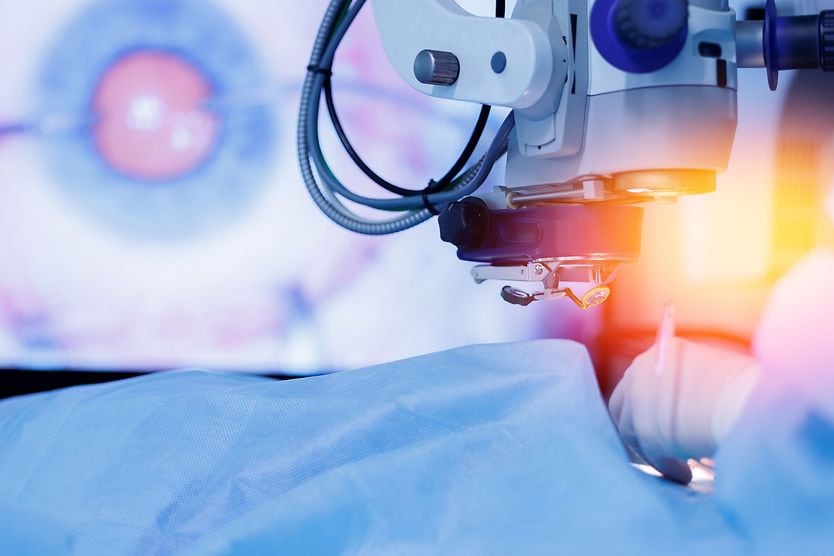
Excimer lasers, designed for laser-assisted in situ keratomileusis (LASIK), are marvels of modern medicine.
Many potential LASIK recipients want to know more about subtle differences among currently approved instruments. But for most people, laser choice makes no significant difference.
Most experts agree that surgeon skill and experience and the quality of care before and after a corrective eye surgery procedure are far more critical factors affecting final LASIK outcomes
Although all approved excimer lasers meet safety and effectiveness criteria established by the FDA, certain people may be better off with one type of laser over another.
Four Must-Knows About Comparing LASIK Laser Outcomes
When evaluating lasers, you may be drawn to information gathered during FDA clinical trials leading up to approval. But you should keep these points in mind when considering FDA data:
Today's results are often better than FDA data. By definition, FDA trials occur during the early period of a laser's life cycle. Manufacturers are allowed to and often do make technical improvements to the instruments, sometimes even while the lasers are still under investigation.
The surgeon's technique evolves as well, and usually becomes more advanced than the technique used in the FDA trials. This, together with increasing surgeon experience over time, means that results in actual clinical practice are often better than the initial FDA data.
FDA data in one study cannot fairly be compared with FDA data in another study. Manufacturers go to the FDA with various study designs, which often have differing endpoints and patient-enrollment criteria. Although all studies must answer certain basic questions regarding safety and effectiveness, they are not designed to be compared with one another.
A true comparison of Laser A and Laser B would require randomized clinical trials, in which patients would be randomly assigned to receive surgery by one laser or the other over the same time period by the same surgeons. FDA trials don't do that--although other, non-FDA studies sometimes do.
Studies don't cover every possibility. Just because you have a characteristic or condition not covered by the approved labeling of a laser doesn't mean the laser won't work for people with your characteristic or condition. It also doesn't mean that another laser approved to treat people with your characteristic will do a better job.
Remember, these studies have differing designs, and people with your characteristic or condition may or may not have been included, or their results may or may not have been analyzed, or there may have been too few such people in the studies to determine statistical or clinical significance.

Once the FDA approves a laser, your surgeon can use it any way he or she deems appropriate. This is true of all FDA-approved drugs and devices. This is commonly referred to as "off-label" use of an FDA-approved drug, device or laser. It's called a physician's practice-of-medicine prerogative, and there's nothing inherently wrong with it.
In fact, most advances in medicine occur because of off label uses of devices or medications. So this type of use can be critical in modern medicine.
For example, without "off-label" use of aspirin, no one ever would have known that aspirin (originally FDA-approved for pain control) is vital for reducing risk of heart attacks.
Armed with this insight, the informed consumer can begin to compare the commercially available laser systems approved for LASIK (see chart). Most discussion about these lasers surrounds the mechanisms they use to deliver the laser beam and track the eye during ablation.
Types of Modern Excimer Lasers Used for LASIK
Slit scanning lasers Slit scanning lasers use relatively small beams linked to a rotational device with slit holes that enlarge. The laser beams scan across these holes during surgery, producing a gradually enlarging ablation zone. The approach provides a uniform beam and potentially smoother ablations than obsolete broad-beam lasers. The disadvantages include a slightly greater risk of decentration and overcorrection unless an eye-tracker is being used with the laser.
Spot scanning lasers Spot scanning (or "flying-spot") lasers, which are the most common, use small-diameter laser beams (0.8 to 2 mm) scanned across the cornea to produce the ablation zone. This approach has the potential to produce the smoothest ablations, to more readily allow customized ablations and to better treat irregular astigmatism.
Wavefront-guided lasers Many excimer lasers are connected to a device that detects and "maps" defects in the eye's optical system, based on how lightwaves travel through the eye. These wavefront devices individually guide the way the eye's cornea is reshaped to achieve a custom LASIK ablation. Both slit scanning and spot scanning lasers have the ability to be used for wavefront-guided treatments.
Excimer Lasers and Eye Tracking
Most modern excimer lasers have automated eye tracking systems to keep the laser beam on target. Studies have shown that eye trackers produce better outcomes and decrease LASIK complications compared with past lasers that did not use eye tracking systems.
Indications and Features of Excimer Lasers
In the following chart, OZ stands for optical zone, meaning the maximum size of the pupil allowing light to pass through the eye that can be targeted effectively for correction with a specific laser. TZ stands for the maximum treatment area, including a transition zone that can be used in an ablation to achieve vision correction in the targeted area.
| Model | Indication | Type of Laser Beam | Optical Zone (OZ) and Treatment Zone (TZ) | FDA Approval Year | |
|---|---|---|---|---|---|
| Alcon LADARVision 4000 & CustomCornea (laser plus wavefront device to guide laser) |
Myopia: up to -8.00 D with or without astigmatism (up to -4.00 D) Hyperopia and hyperopic astigmatism: up to +5.00 D (near vision problems) and astigmatism causing distance vision problems up to -3.00 D |
Scanning spot (0.8 mm) |
OZ: 5.5 mm TZ: 7.5 mm |
2002 (myopia with or without astigmatism) 2006 (hyperopia and hyperopic astigmatism) |
|
| Bausch & Lomb Technolas 217A and Technolas 217z Zyoptix (laser plus wavefront device to guide laser, approved 2003) |
Myopia: up to -12.00 D with or without astigmatism (up to -3.00 D) Hyperopia: up to +4.00 D with or without astigmatism (up to +2.00 D) |
Scanning spot (2.0 mm) |
OZ: 6.0 mm TZ: 7.0 mm |
2000 (myopia from -1.00 to -7.00 D) 2002 (myopia up to -11.00 D) 2003 (hyperopia with or without mixed astigmatism) |
|
| Carl Zeiss Meditec MEL 80 |
Myopia: up to -7.00 D with or without astigmatism (up to -3.00 D) |
Scanning spot (0.7 mm) Gaussian profile with more energy applied centrally |
OZ: 6.0 to 7.0 mm TZ: 7.7 to 8.9 mm |
2006 (myopia with or without astigmatism) |
|
| Nidek EC-5000 | Myopia: -1.00 to -14.00 D with or without astigmatism (less than 4.00 D) Hyperopia: +0.50 to +5.00 D and up to +2.00 D astigmatism |
Scanning slit (7.0 x 2.0 mm) |
OZ: 5.5 mm TZ: 7.0 mm |
2000 (myopia from -1.00 to -14.00 D) 2006 (hyperopia and hyperopic astigmatism) |
|
| Visx Star S4 & WaveScan WaveFront System (laser plus wavefront device to guide laser) |
Myopia: up to -6.00 D with or without astigmatism (up to -3.00 D) |
Variable scanning spot beam (0.65 mm to 6.5 mm) |
OZ: 4.0 to 9.0 mm TZ: 4.5 to 9.5 mm |
2003 | |
| Visx Star S4 IR & CustomVue (laser plus wavefront device to guide laser) |
Myopia: up to -6.00 D with or without astigmatism (up to -3.00 D) Hyperopia: up to +3.00 D and up to +2.00 D of astigmatism Mixed astigmatism: up to 5.00 D |
Same as S4 |
OZ: 6.0 mm TZ: 9.0 mm |
2005 | |
| WaveLight Allegretto Wave |
Myopia: up to -12.00 D with or without astigmatism (up to -6.00 D) Hyperopia: up to +6.00 D with or without astigmatism (up to +5.00 D, not exceeding mean spherical equivalent or total refractive error of +6.00 D) Mixed astigmatism: up to 6.00 D |
Scanning spot beam (0.95 mm) with emphasis on applying more energy centrally (Gaussian profile) |
OZ: 4.5 to 8.0 mm TZ: 5.2 to 8.7 mm for spherical treatments; 7.0 to 9.0 mm for cylindrical and spherico- cylindrical treatments |
2003 (myopia and hyperopia) 2006 (mixed astigmatism) |
|
| WaveLight Allegretto Wave With Allegro Analyzer (laser plus wavefront device to guide laser) |
Myopia: up to -7.00 D with or without astigmatism (up to 3.00 D) Mixed astigmatism: up to 6.00 D |
Same as Allegretto Wave |
OZ: Same as Allegretto Wave TZ: Same as Allegretto Wave |
2006 2007 (mixed astigmatism) |
|
| Notes: "D" is an abbreviation for "diopters." While FDA approval is based on studies with these levels of diopters, individual doctors are free to use their own discretion in deciding what is best for their patients. For example, a doctor may choose to use a laser for a patient whose vision falls outside the above ranges or may decide against using any laser on a patient with -13.50 D of myopia, even though some are approved for up to -14.00 D. It is important for you to discuss the risks and benefits with your doctor before surgery is performed. | |||||
Pupil Size, Ablation Speed, and Patient Comfort
In recent years, increasing evidence has indicated that the zone where laser energy is applied to reshape the eye during LASIK may be too small to accommodate larger pupil sizes. If your pupil expands in low light beyond the zone where the eye was reshaped (ablated) for vision correction, you may have vision problems such as glare and halos at night.
Some surgeons believe the diameter of the zone where laser energy is used (ablation zone) should be at least as large as your pupil in dim light. If you have larger pupils, the type of excimer laser may be important in relation to how large an optical zone the machine is capable of creating. You should discuss this with your surgeon.
Ablation times also differ among lasers, ranging from 30 to 60 seconds or longer. You may consider that important in terms of your comfort as you undergo a procedure.
You also might want to ask whether your surgeon uses a laser or a bladed instrument (microkeratome) to create the flap used in LASIK eye surgery and how these two approaches might differ in terms of your comfort. Many surgeons take opposing sides in the blade vs. bladeless LASIK debate.
Again, no matter which laser is used, remember that ultimately your surgeon's skill and experience likely will be the most important factors affecting your LASIK outcome. 
[Page updated August 2008]
- Learn about iLASIK advanced laser vision correction
- Tears Again Hydrate gels contain omega-3 fatty acids to treat dry eyes
- Get no-interest financing on LASIK today from CareCredit
- Don't have LASIK until you've read this...
- Similasan eye drops relieve and soothe dry eyes after LASIK

Reproduction of any images or text from this website is prohibited by copyright law.