LASIK enhancement: When additional surgery is needed

Assessing visual satisfaction after LASIK
A number of factors can affect your satisfaction after LASIK:
- The characteristics and health of your cornea
- Whether you are nearsighted or farsighted or have astigmatism
- The severity of your refractive error and strength of your eyeglass prescription
- Whether you are at risk of dry eyes after LASIK
- Your age
- Your expectations
Although LASIK may successfully correct high degrees of nearsightedness, farsightedness and astigmatism, younger people with mild nearsightedness and astigmatism generally are considered the best candidates.
Your expectations before LASIK also play a key role in how happy you may be afterward. Remember, the goal of LASIK is to decrease your dependence on glasses and help you see acceptably well without corrective lenses. Results vary from person to person.
Although many people who have had LASIK believe they see better than they did with eyeglasses or contact lenses before surgery, not everyone has the same experience.
After LASIK, you can expect your vision to be slightly better or about the same as it was with glasses.
A small percentage of people may notice their vision is not quite as good after LASIK as it was with glasses before the procedure. But you should be able to drive safely and perform other routine daily tasks without glasses or contact lenses after vision correction surgery.
While LASIK provides long-term correction of your vision, it’s possible that your eyes could change over time. Many people will experience vision changes due to the natural aging process. So while you may have had optimal results from your LASIK procedure, you may find that new vision needs can develop as you age.
When is a LASIK enhancement needed?
Don't panic if your vision isn't perfectly clear immediately after LASIK surgery.
When evaluating your vision after LASIK, it's important to be patient (no pun intended). Although you should be able to see much better without glasses the day after surgery, it's not unusual for vision to fluctuate for several weeks.
As part of your follow-up care after LASIK, your eye doctor will monitor your vision for several weeks to months.
Though not expected, it's possible that you may feel uncomfortable driving or performing other visual tasks after LASIK. If this occurs, be sure to tell your eye doctor. If necessary, they can prescribe new eyeglasses or contact lenses for you to wear part-time until your vision improves and stabilizes.
If your vision is still noticeably blurred three months after LASIK, you may need an enhancement. This is the case for a small percentage of patients, as about 90% of patients will experience 20/20 vision or better from their initial LASIK treatment.
However, it is important to note that LASIK enhancement carries similar risks to the initial procedure. These can include postoperative dryness, glare or halos at night, and eye discomfort. Your eye doctor will weigh these factors carefully before recommending a second procedure.
To determine whether you're a good candidate for a LASIK enhancement, your eye doctor will re-evaluate your corneas with the same methods used prior to your first LASIK procedure.
Among other considerations, your eye doctor will check to see whether you have enough corneal thickness for a second surgery.
If LASIK enhancement may not be right for you
You may not be a good candidate for enhancement if:
- There is too little refractive error remaining after the initial LASIK for another laser treatment.
- Your vision is changing.
- You have thinning of the cornea (ectasia/keratoconus).
In these cases, wearing eyeglasses on a part-time basis might be beneficial to sharpen your vision as needed.
For more comfort and clarity, choose eyeglass lenses with anti-reflective coating. This coating reduces distracting reflections and provides sharper vision in low-light conditions such as driving at night.
Many people with presbyopia find wearing progressive lenses to be convenient after LASIK. These multifocal lenses can provide clear vision at all distances without the need to carry a separate pair of reading glasses.
It might also be worthwhile to invest in high-definition lenses that can correct higher-order aberrations that regular eyeglasses cannot address.
And if you are sensitive to light after LASIK surgery, ask about photochromic lenses. They darken automatically in response to sunlight for greater comfort outdoors.
How does it compare with a primary LASIK procedure?
A LASIK enhancement is nearly identical to a primary LASIK procedure, except for one aspect. Rather than using a microkeratome or laser to create a corneal flap, the surgeon performing a LASIK enhancement uses specialized tools to lift the flap that was created on your eye's surface during your primary LASIK surgery.
Re-lifting the flap typically takes only one or two minutes. Then your surgeon uses an excimer laser to reshape your cornea. Though you may feel some pressure or discomfort, the procedure is not painful.
Typically, only minimal additional reshaping of the cornea is necessary during an enhancement, making the procedure brief. The laser treatment itself takes just a few seconds.
After the enhancement, you will receive the same post-operative instructions that you were given after your primary LASIK procedure. It might feel more scratchy that day than the first time. Be sure to follow your eye doctor's instructions exactly to reduce the risk of eye infection and set you up for good visual outcome.
In many cases, only one LASIK enhancement is necessary to restore vision to an acceptable level. However, in difficult cases, more than one enhancement may be required.
How much does a LASIK enhancement cost?
Many surgeons do not charge an additional fee for LASIK enhancements performed within one year of a primary LASIK procedure that they performed themselves. But pricing policies can vary considerably among refractive surgeons and surgery centers.
When choosing a LASIK surgeon, ask about policies and fees for enhancement procedures and the additional follow-up care needed if a LASIK enhancement is performed.
Other enhancement options
LASIK enhancement surgeries can be performed to improve eyesight after refractive procedures other than LASIK, such as phakic IOL implantation and refractive lens exchange (RLE). And in some cases, procedures other than LASIK may be used for enhancements.
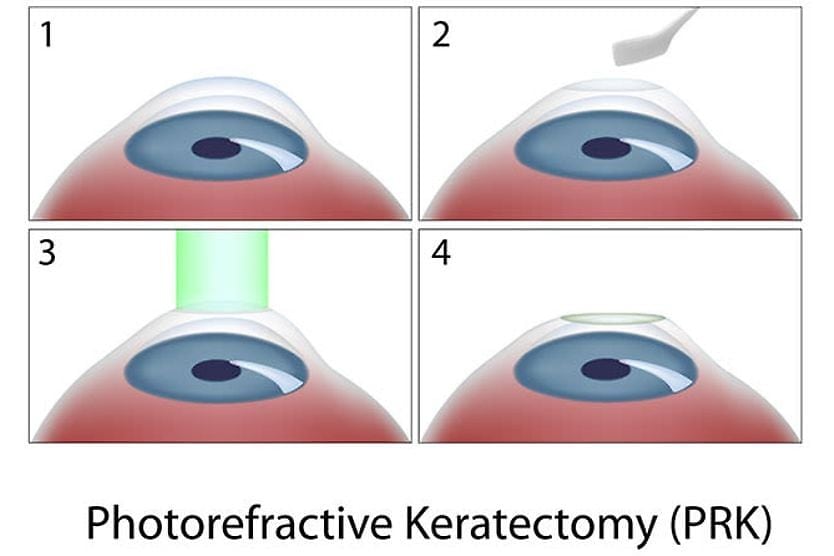
For example, a refractive surgeon may prefer PRK over LASIK for an enhancement because they don’t need to create or re-lift a flap for PRK.
For enhancements done many years after the original LASIK, PRK is preferred by many surgeons, as it generally carries less risk of surface cells growing under the flap (epithelial ingrowth).
LASIK and PRK enhancements can also be used after cataract surgery to eliminate residual refractive errors and sharpen vision.
If you’ve had LASIK or any other type of refractive eye surgery (including cataract surgery) and believe your vision isn't as sharp as it should be, visit your eye doctor to see whether an enhancement procedure is an option for you.
Have routine eye exams after LASIK
Even if you have a perfect LASIK outcome, you should schedule routine eye exams after LASIK surgery to make sure your vision is clear and your eyes are healthy.