What are progressive lenses?
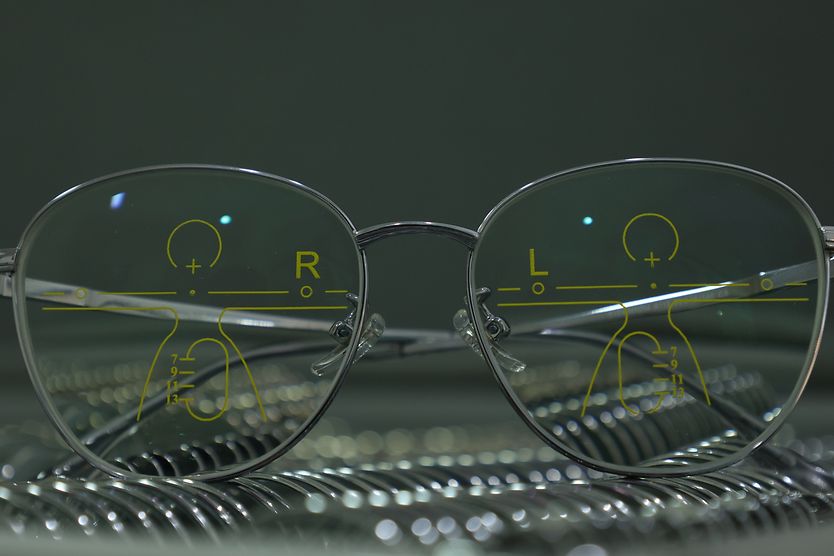
Progressive lenses are a type of multifocal lens designed to help you see clearly at all distances. They contain multiple vision zones across the lens surface. Progressives offer a seamless transition between prescription powers, lacking the visible lines usually seen in bifocal and trifocal lenses.
Progressive lenses are commonly used by adults aged 40 and over who experience presbyopia, an age-related vision condition affecting the eyes’ ability to focus on nearby objects. This often makes it hard to see clearly during close-up tasks like reading a book or looking at your phone.
Some people with presbyopia use reading glasses to improve their near (close-up) vision. However, those who already wear single-vision glasses for near or distance vision may need multiple prescriptions once presbyopia develops. Progressives solve this issue by combining near, intermediate and distance vision prescriptions into one pair of glasses.
While progressives are commonly prescribed for presbyopic adults, they may also be used to help manage certain vision conditions in children.
Progressive eyeglasses are sometimes referred to by other names, such as:
- Varifocals
- Progressive addition lenses
- PALS
They’re also called "no-line bifocals" since they lack the visible line seen on other multifocal glasses lenses.
Progressive lenses typically have a more advanced multifocal design than bifocals or trifocals, with a seamless transition between power zones. Their smooth, line-free surface also offers a more aesthetically pleasing appearance.
Progressive vs. bifocal lenses
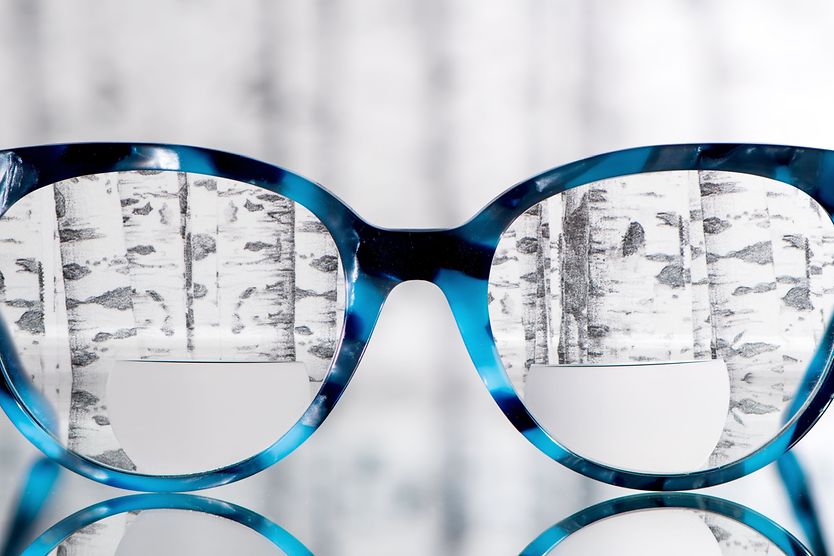
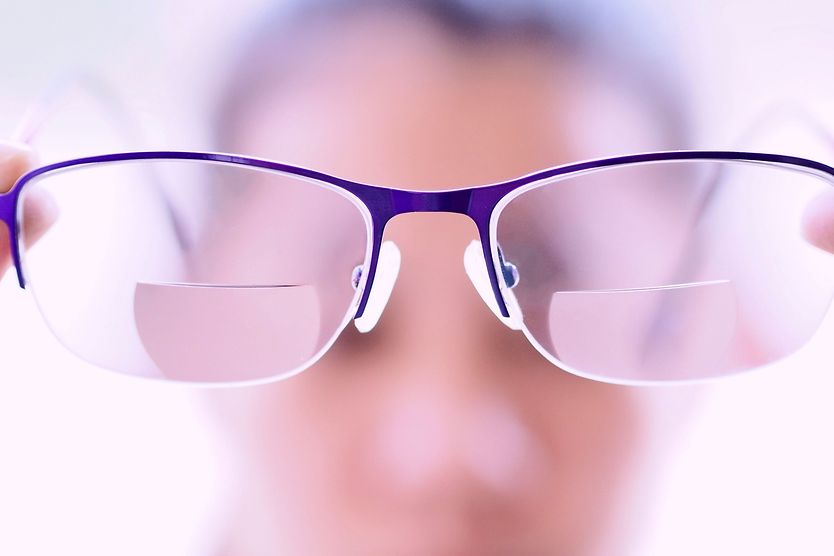
Bifocals contain two optical powers (prescriptions) within each lens. They have one power in the top portion for seeing distant objects clearly and a second in the bottom for seeing up close. The junction between the two power zones is typically defined by a visible “bifocal line.”
Some bifocals have no visible lines. Often referred to as “ blended lenses,” this type may be ideal for those who need near and distance vision correction but want a seamless appearance to their glasses. However, because these are blended bifocal lenses, they do not contain an intermediate zone like PALs.
Progressive vs. trifocal lenses
Trifocals have three distinct zones of optical power — one for near, one for distance and one for intermediate tasks (those performed at arm's length). The intermediate power of a trifocal lens is located in the center horizontal segment, between the distance and near power zones.
Like bifocals, most trifocals have visible lines separating the vision zones.
SEE RELATED: Reading glasses vs. multifocal glasses
How do progressive lenses work?
Progressives correct vision at all distances. The optical powers within the lenses gradually “progress” from one to the next, providing a seamless transition between vision zones.
Here’s how they work:
- Distance vision – The top portion of the lens allows you to see at a distance, such as when driving or watching TV.
- Intermediate vision – The middle part of the lens is used for tasks performed at arm’s length, like computer work.
- Near vision – The bottom section is used for reading and other close-up tasks.
This gradual shift between optical powers avoids the abrupt changes in vision that are common with bifocals and trifocals.

Progressive lenses are line-free multifocals that have a seamless progression of added magnifying power for intermediate and near vision.
READ MORE: Single-vision vs. progressive lenses
Benefits of progressive lenses
When it comes to wearing multifocals, progressive lenses are often preferred due to their many advantages:
- They improve vision at all distances.
- There are no visible lines on the lens surface, providing a more attractive appearance.
- There is no “image jumping.” This is a sudden change to visual clarity or an object’s apparent location when shifting your gaze between optical zones.
- They provide a smooth, seamless transition between powers, offering greater visual comfort.
- They prevent the need to switch between multiple pairs of glasses to see clearly at various distances.
Who should wear progressive lenses?
Progressive eyeglasses can be beneficial in many circumstances. Ideal candidates for wearing these lenses are often those who experience one or more of the following:
- Have trouble seeing up close, such as when reading a book, threading a needle or needing magnification for improved visual clarity.
- Need to hold menus and other items at arm’s length to see them clearly.
- Have difficulty seeing a computer monitor from a normal distance.
- Already wear corrective lenses for hyperopia (farsightedness), myopia (nearsightedness) or astigmatism, and are having a tough time seeing up close with their current glasses.
- Want to consolidate multiple vision prescriptions into one pair of glasses.
- Prefer the aesthetic, uniform appearance of progressives over the visible lines on traditional multifocal glasses.
In children, progressive lenses may be used to help manage myopia progression or other focusing issues.
During a comprehensive eye exam, your eye doctor can determine if progressive lenses meet your vision and lifestyle needs.
Types of progressive lenses
Various types of progressive eyeglass lenses are available, each carrying its own set of advantages. Common types include:
Standard progressive lenses
Standard progressive lenses are made using general measurements to suit a wide range of people. The optical zone placements for near, intermediate and distance vision are standardized across the lenses. This means they fall within the same area on each lens. This may require more head and eye movement to find the ideal viewing position for various distances.
Standard lenses usually work well in larger frames. While this increases their availability for use, it limits the range of frame styles for these lenses. However, they typically have a lower price point than premium and customized options.
Premium progressive lenses
Premium progressive lenses often provide a higher level of comfort and performance than standard options. They feature wider optical zones with less peripheral distortion and smoother transitions between lens powers.
Premium lenses can be customized according to individual eye measurements and vision prescriptions. They can also be made to fit a wider variety of frames. This type of progressive lens usually carries a higher cost due to its premium features.
Custom progressive lenses
Custom or "free-form" progressive lenses are made with advanced design and production tools. These lenses are customized to fit individual eye measurements and prescriptions. As a result, they may provide more accurate vision correction and minimal peripheral distortion, optimizing your visual comfort.
Because of their custom design, they tend to cost more than premium and standard progressive lenses.
Computer progressive lenses
Computer glasses help you see clearly at an intermediate distance, making them ideal for viewing a computer monitor. Also referred to as near-variable focus lenses or office lenses, they can be a good choice for those who spend several hours a day working on a computer. These lenses may also help reduce eye strain associated with prolonged computer use.
Progressive computer glasses may not be ideal for all-day use (or driving) because the intermediate zone is larger than in other lens types. They’re often purchased as a second pair of specialty glasses to be worn when clear intermediate vision is a priority.
LEARN MORE: Custom glasses for computer use
Short-corridor progressive lenses
Short-corridor progressives are ideal when smaller frame styles are needed or desired. With this option, the vertical space between the distance and near vision zones is shorter. This means your eyes can reach the near vision zone more quickly than with other progressive lens options.
Ground-view progressive lenses
Ground-view progressives are specialty lenses designed for those who spend considerable time looking downward, such as when playing golf or other sports. However, they can also be useful for normal daily activities like driving and computer work. The design allows for enhanced clarity when looking through the lower portion and sides of the lens.
Progressive sunglasses
Many sunglass frames can also be fitted with progressive sunglass lenses, allowing you to enjoy the benefits of clear far and close vision while outdoors.
Another option for progressive outdoor eyewear is photochromic lenses, which automatically adapt to changes in lighting conditions. They transition to a darker tint in response to ultraviolet light from the sun and become clear again in indoor settings.
SEE RELATED: How photochromic lenses work
How to choose the right progressive lenses
Progressive eyeglasses are a good option for many people. But if you’re considering these lenses for your vision needs, selecting the right type is key to your comfort and visual experience.
Factors to consider
Various factors may influence your lens decision, including:
- Lifestyle and daily activities – Choose the progressive lens option that best suits your lifestyle and day-to-day routine. For instance, if you spend a lot of time using a computer or reading, certain lens types may be more suitable.
- Prescription needs – Some vision prescriptions may require specific types of lenses. Your eye doctor can recommend the best option for your overall vision needs.
- Frame size – Different lens types require specific frame sizes. Keep this in mind and ask your optician for guidance when deciding between smaller vs. larger frames.
- Budget – The cost of a standard vs. premium progressive lens can vary. Consider what you’re willing to spend when choosing the right option for you.

Cost of progressive lenses
Progressive eyeglasses are typically more expensive than other multifocal spectacles and single-vison options. This is due to the technologies, techniques and time involved in their production.
Several factors can impact the cost of progressives, including:
- Lens type (standard progressive lenses vs. premium progressive lenses, etc.)
- Lens materials (such as plastic, polycarbonate or glass)
- Lens coatings or treatments (such as anti-reflective coating and photochromic lens treatment)
- Lens production processes
- Custom lens features
- Vision prescriptions
- Frame material and design
- Brands/manufacturers of lenses and frames
- Retailers
- Vision insurance coverage
Pricing for different types of progressive lenses can vary widely based on these factors. Here’s an overview of the average costs for a pair of lenses:
- Standard lenses – $175 to $250
- Premium and custom lenses – $600 to $800
- Computer lenses – $150 to $250
- Short-corridor lenses – $250 to $400
- Ground-level lenses – $350 to $550
Note: These prices are for lenses only, without insurance. Adding frames to your eyewear order will affect (and increase) the total cost of your new multifocal glasses.
SEE RELATED: How much do glasses cost?
Adjusting to progressive lenses
Due to the multiple prescription zones within progressive eyeglasses, it can take time to adjust to wearing them. It’s important to allow yourself an adjustment period as you learn to use your progressive lenses.
Tips for adjusting to progressive lenses
To help make the adjustment process smoother, consider the following tips:
- Ensure a proper fit – Work with your optician or eye care professional to make sure your frames fit comfortably and properly.
- Wear them regularly – Start by wearing your new glasses a few hours each day and work up to wearing them for longer periods.
- Move your head to direct your gaze – Instead of only moving your eyes, make a conscious effort to move your head to look at an object. A good rule of thumb is to aim your nose toward the item you want to see.
- Request an adjustment – If you have trouble getting used to your new glasses, talk to your eye doctor or optician. They may be able to adjust the frame to improve your comfort.
- Be patient with yourself – It’s normal for progressives to feel a little strange at first. Give yourself time to get used to your new lenses.
Your eye care professional can offer further tips on how to use progressive lenses and optimize their function.
Common issues and how to overcome them
When you first start wearing progressives, you may notice symptoms such as:
- Blurriness or a “swim effect” in your peripheral vision
- Headaches
- Nausea
- Balance problems
- Dizziness
- Depth perception issues
A helpful approach to overcome these challenges is to wear your progressives as often as possible, especially during the adjustment phase. When new glasses are worn continually, these symptoms tend to resolve within a few weeks.
You’ll also need to get used to using the correct section of the lenses for specific activities. For example, you’ll need to look through:
- The top portion for distance tasks, like when using stairs
- The lower portion for reading and other near tasks
Once you get used to doing this, your comfort level should improve.
Do I need progressive lenses?
If you’re experiencing presbyopia and already wear glasses for near or distance vision correction, you may be a good candidate for progressives. Your eye doctor can determine if progressive prescription lenses are right for you.
Schedule an eye exam with your optometrist or ophthalmologist to assess your eye health and vision needs.
READ NEXT: Eyeglass basics