Presbyopia: What causes it and how to treat it

On this page
What is presbyopia?
Presbyopia signs and symptoms
What causes presbyopia?
Presbyopia treatment
Presbyopia is part of growing older
On this page
What is presbyopia?
Presbyopia signs and symptoms
What causes presbyopia?
Presbyopia treatment
Presbyopia is part of growing older
What is presbyopia?
Presbyopia is the normal loss of near focusing ability that occurs with age. It occurs as the eye’s natural crystalline lens gradually becomes stiffer and less flexible over time. This affects your near vision, making it difficult to see close objects clearly and in detail.
The majority of people begin to notice the effects of presbyopia after age 40. The first symptom is often having difficulty seeing small print clearly. The condition continues to worsen until around age 65, when these vision changes tend to stabilize.
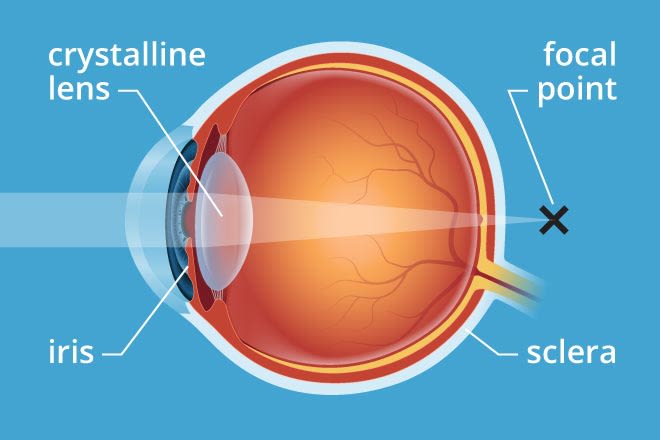
The eye's natural lens stiffens with age, so it is less able to focus when you view something up close.
Researchers estimate that around 1.8 billion people worldwide have presbyopia. They expect this number to rise to over 2.1 billion by 2030.
In parts of the world with little or no access to vision care, presbyopia is much more than an inconvenience — it's a leading cause of visual impairment that reduces people's quality of life and productivity.
Though presbyopia is a normal eye-related change, it can feel like a significant and emotional event. It’s a sign of aging that’s hard to ignore and difficult to hide.
Presbyopia signs and symptoms
The signs and symptoms of presbyopia often develop gradually and can impact your life in several ways. They can include:
- Blurred vision when looking at close objects
- Difficulty reading small print at a normal distance
- Squinting to see close objects more clearly
- Holding objects at arm’s length to see them more clearly
- Needing brighter light for near tasks
- Eye fatigue after doing close-up work
- Eye strain or general discomfort
- Headaches (especially after reading or doing detailed tasks)
- Double vision (diplopia)
- Inability to focus back and forth between far and close (accommodative infacility)
- Focus staying stuck in close mode (accommodative spasm)
If you experience any of these signs or symptoms, schedule a comprehensive eye exam with your eye doctor. Regular comprehensive eye exams are important for monitoring your eye health and vision over time.
What causes presbyopia?
While the exact cause of presbyopia is not fully understood, experts consider age the primary risk factor. Other factors can also increase the likelihood of developing it.
Age and eye changes
Presbyopia occurs as age-related changes affect the eye’s natural crystalline lens. Along with the cornea (the clear, dome-shaped structure at the front of the eye), the lens helps focus light onto the retina to help you see. The retina is the light-sensing membrane at the back of the eye.
In youth, the lens is pliable and flexible, easily changing shape to let you focus at different distances. Over time, changes in the lens proteins cause it to become stiffer and less elastic. This makes it difficult for you to focus on nearby objects or see things clearly up close.
LEARN MORE: Does age affect eyesight after age 40?
Other risk factors
Certain factors can increase the risk of developing presbyopia earlier than usual, including:
- Hyperopia (farsightedness)
- Health conditions (such as diabetes, some heart and neurological diseases, and multiple sclerosis)
- Medications (such as antidepressants, antihistamines, antispasmodics and diuretics)
- Premature menopause
- Anemia
- Head or eye trauma
- Procedures involving the eye’s lens (such as cataract surgery)
- Genetics
- Prolonged exposure to ultraviolet (UV) radiation
- Eye strain from excessive use of digital devices
- Smoking
- Poor nutrition
- Infrequent eye care
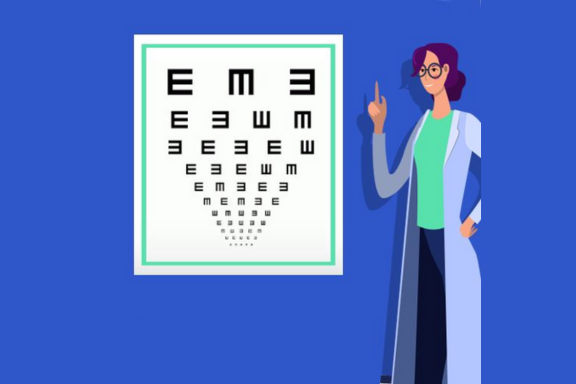
Disclaimer:
These tests have no diagnostic value. If they indicate potential vision difficulties, we recommend you follow up with a comprehensive eye health exam with a vision care professional.
Presbyopia treatment
Many people discover these eye-related changes on their own as their ability to see clearly up close begins to decline. However, your eye doctor can confirm you have presbyopia during an eye exam and help determine an appropriate treatment plan.
While presbyopia cannot be prevented or reversed, several effective treatments are available. In some cases, one or more presbyopia treatment options may be combined to provide optimal vision correction.
Eyeglasses
Several types of eyeglasses can help correct presbyopia. The right choice of glasses depends on your vision needs, lifestyle and personal preferences. Options include:
Reading glasses
Reading glasses may be ideal if you don’t have any other vision conditions, such as myopia (nearsightedness), hyperopia or astigmatism, and you only need help seeing close objects and small print more clearly. Many people purchase over-the-counter readers, but it’s recommended to see your eye doctor to determine the lens power you need.
If you wear contact lenses, your eye doctor can also prescribe reading glasses to be worn with them.
Some people find it inconvenient to put readers on and take them off all the time (or leave them on the tip of their nose). For these people, having a progressive or bifocal option may be ideal.
Bifocals
Bifocal eyeglasses have two separate prescription powers within one lens, often marked by a visible line. The lower part of the lens is used for reading and other near tasks, while the top portion is used for distance vision. This option may be optimal for those who need glasses to correct both presbyopia and another vision condition.
For example, in bifocals for office work, the top part of the lens allows the person to focus on their computer (intermediate distance) and the bottom is for focusing even closer.
Trifocals
Trifocal lenses have three separate prescription powers within one lens:
- Lower portion – Corrects near vision.
- Middle portion – Corrects intermediate vision.
- Top portion – Corrects distance vision.
Like bifocals, trifocals often have visible lines separating the different prescription powers.
Progressives
Progressive lenses also have three separate prescription powers within one lens. But unlike trifocals, they provide a smooth transition between lens powers without the visible lines. Progressives are the most common type of multifocal lenses for people with presbyopia.
Another progressive lens option is office progressives (also called office lenses). They are typically worn for use with near and intermediate vision, such as when working on a computer.
Optional lens features
Certain lens features can be helpful for people with presbyopia, such as:
Photochromic lenses
As people age and develop conditions such as presbyopia, it’s common to notice increased sensitivity to light and glare. Photochromic lenses, which darken automatically in sunlight and return to clear indoors, can help reduce this discomfort.
Anti-reflective coating
No matter which type of eyeglasses you choose to correct presbyopia, lenses with an anti-reflective (AR) coating are worth considering. This coating reduces lens reflections that can be distracting and may contribute to eye strain and other issues. AR coating also helps reduce glare and increase visual clarity, especially during nighttime driving.
Contact lenses
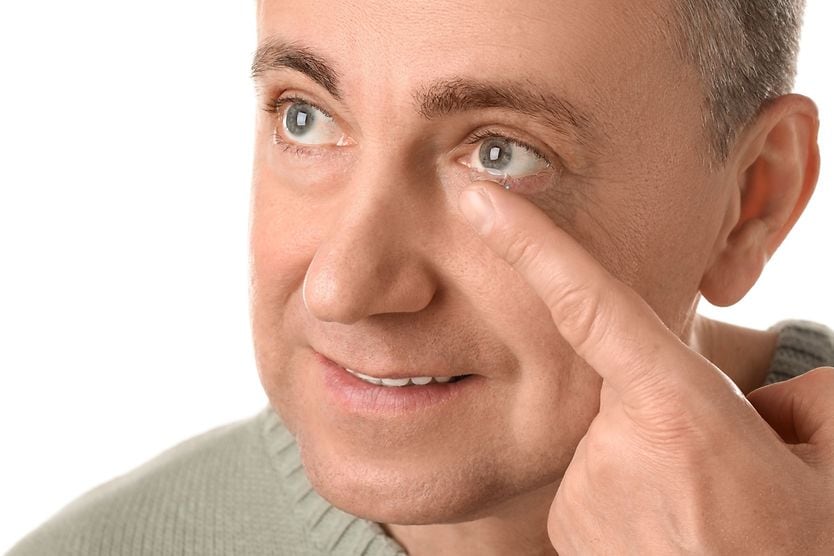
People with presbyopia may also have the option of wearing contact lenses. Several types of contacts are available to meet various vision needs, including:
Multifocal contact lenses
Multifocal contacts have multiple lens powers within one lens, providing vision correction at different distances. Multifocal lenses are similar to progressive eyeglass lenses, gradually transitioning between prescriptions. However, in contact lenses, the different lens powers are focused into the eye simultaneously, while with glasses one looks through a single lens power at a time.
Multifocal lenses can be made from soft contact or gas permeable (GP) materials while bifocal lenses come in GP designs.
Monovision
Another type of contact lens correction for presbyopia is monovision. With this approach, the patient wears a contact lens for distance prescription in one eye and a prescription for near vision in the other eye. The brain learns to favor one eye or the other for different tasks.
Modified monovision
This is a variation of monovision, in which a person wears multifocal lenses with one eye adjusted for better far and intermediate distance and the other eye for better intermediate and near distance. In some cases, this can be adjusted more with a single-vision lens in one eye and a multifocal lens in the other eye.
Because presbyopia may progress as you grow older, your glasses or contacts prescription will likely need to be adjusted over time. Your eye doctor may prescribe a stronger correction for near work as your presbyopia progresses.
Presbyopia surgery
If you prefer not to wear glasses or contact lenses, several surgical options to treat presbyopia are available. These procedures can help improve your near vision and reduce your dependency on corrective eyewear.
Laser refractive surgery
Corrective eye surgery treats presbyopia by reshaping the cornea to improve vision at different distances. These procedures include:
Laser-assisted in situ keratomileusis (LASIK)
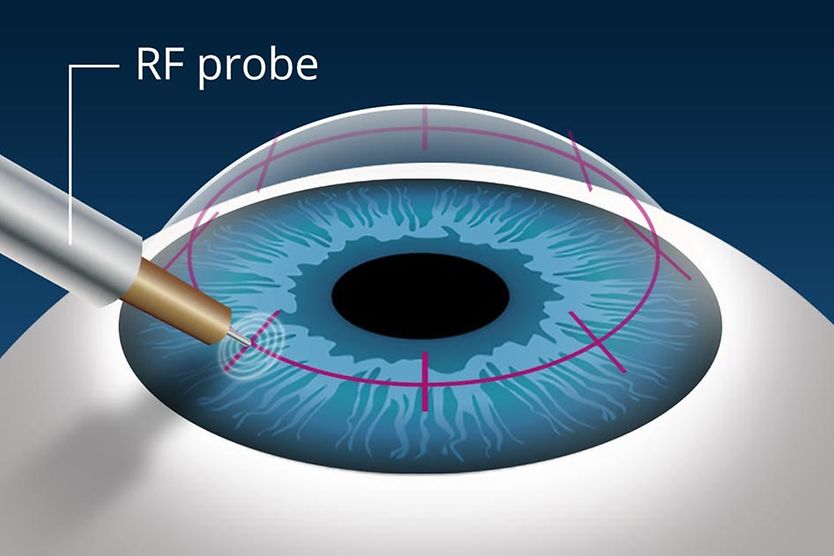
LASIK uses a laser to make a flap on the cornea’s surface. The cornea is then reshaped, improving its ability to properly focus light on the retina. The flap is then put back into place and allowed to heal naturally.
Variations of LASIK for presbyopia include:
- Monovision LASIK – Corrects one eye for near vision and the other eye for distance vision.
- PresbyLASIK – Corrects both eyes with a multifocal approach to improve vision at multiple distances.
Photorefractive keratectomy (PRK)
During PRK, the cornea’s surface layer is removed, allowing the laser to reshape the underlying tissue. The removed layer regenerates naturally over the following days.
Similar to LASIK, PRK can be performed using monovision (one eye for near, one eye for distance) to correct presbyopia.
Lens implants
Lens implant procedures focus on replacing or modifying the natural crystalline lens to treat presbyopia. There are two primary types:
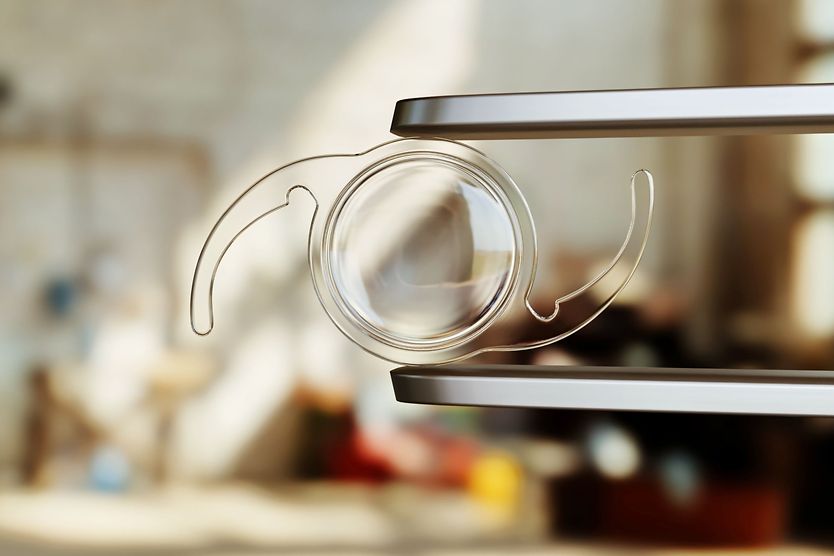
- Refractive lens exchange – Also called clear lens exchange. The natural lens is removed and replaced with a presbyopia-correcting intraocular lens (PC-IOL) that provides vision correction at multiple distances. A monovision approach may also be taken, placing one IOL for distance vision and the other IOL for near vision. This implant sits behind the iris (the colored part of the eye).
- Lens implant – A phakic IOL (pIOL) is implanted while keeping the natural crystalline lens in place. It may be placed in front of the iris.
Corneal inlays
A less common surgical option is a corneal inlay. Typically implanted in the cornea of your nondominant eye, a corneal inlay improves near vision in the treated eye. The dominant eye is left untreated.
There are three primary types of corneal inlays:
- Small aperture inlays – These work by increasing your depth of focus, which improves your near vision.
- Corneal reshaping inlays – These change the shape of the cornea to improve your near vision.
- Refractive corneal inlays – These adjust the eye’s refractive power to improve vision at different distances.
The first step to see if you’re a good candidate for presbyopia surgery is to have a comprehensive eye exam and consultation with an eye doctor who specializes in these procedures.
SEE RELATED: Presbyopia and treatments FAQ
Eye drops and medications
An emerging option for managing presbyopia is the use of eye drops to improve near vision. These drops work by temporarily constricting the pupil, which increases your ability to focus and see close objects more clearly.
The U.S. Food and Drug Administration (FDA) has approved the following eye drops for managing presbyopia:
- Carbachol/brimonidine tartrate 2.75%/0.1% – Approved in 2026. This dual-action drop is used one time per day, with results lasting up to 10 hours
- Aceclidine 1.44% – Approved in 2025. It’s used at the beginning of the day (one drop followed by a second drop two minutes later), with results lasting up to 10 hours.
- Pilocarpine 0.4% – Approved in 2023. It’s used one to two times per day, with results lasting up to eight hours.
- Pilocarpine 1.25% – Approved in 2021. This drop is used one to two times per day, with the results lasting around six to 10 hours.
Other eye drop medications are in various stages of research and FDA review, with clinical studies suggesting promising outcomes.
Potential drawbacks and risks
While these drops can temporarily improve near vision, they have some potential drawbacks:
- The results may be limited, only improving vision to a certain degree.
- Glasses may still be needed to see clearly at a distance.
- The results are temporary, only improving near vision for several hours after use.
- Some users may experience side effects due to the pupil constriction, such as headaches at the eyebrow level, eye redness and reduced night vision.
These drops may not be ideal for people with early cataracts. They could also lead to retinal detachments in rare cases, especially in people with high amounts of myopia or retinal thinning. Because of this, the drops are not recommended for these patients.
Presbyopia is part of growing older
Presbyopia is a normal part of aging that often eventually affects everyone. It usually begins around age 40, when you might find yourself squinting at nearby objects or holding them farther away to see more clearly. While it’s a natural process, there are several ways to manage it effectively and support your vision.
If you’re beginning to notice signs and symptoms of presbyopia, visit your eye doctor for an eye exam to determine the ideal treatment options for you.
On this page:
What is presbyopia?
Presbyopia signs and symptoms
What causes presbyopia?
Presbyopia treatment
Presbyopia is part of growing older
On this page:
What is presbyopia?
Presbyopia signs and symptoms
What causes presbyopia?
Presbyopia treatment
Presbyopia is part of growing older