Where to buy contact lenses

Where can you buy contacts?
Finding the right place to buy contacts is often a matter of determining the ideal value combination of price, convenience and service. Before deciding where to buy, take some time to consider the pros and cons of buying contact lenses from your eye doctor, an online vendor or a retail store.
Wherever you choose to purchase your contacts, you will need a valid contact lens prescription from your optometrist or ophthalmologist to place your order in the United States.
Buying contacts from your eye doctor
For many contact lens wearers, buying replacement contacts directly from their eye doctor is the ideal option.
People often wrongly assume that purchasing contacts from their eye doctor will be the more expensive option. In fact, many eye doctors offer competitive pricing compared to buying contacts online or from a large retailer, and they can provide the added value of more personalized and knowledgeable service.
Also, if your contacts are bothering you, your eye doctor can often see you that day to evaluate the problem.
A potential downside of buying contacts from your eye doctor is that service hours are limited to the days and times the office is open, but many have addressed this issue by offering automatic reordering and home delivery. Some eye doctors also offer the ability to order lenses from their websites.
And if your contact lens prescription has expired, you can often get your next eye exam and pick up a new supply of lenses at the same time.

Check shipping rates before ordering your contacts, whether you purchase them from your eye doctor, online or at a retail store. Sometimes the charges are significant, while in other instances, there may be no charge at all.
Buying contacts online
It’s tough to beat the convenience of purchasing replacement contact lenses online. And pricing is usually competitive. However, the level of service can vary among online sellers.
Several factors to consider when buying contacts online include:
- Product availability – Do they have a wide selection, with the exact lenses your doctor prescribed consistently in stock and ready for immediate shipment?
- Shipping charges – Is free shipping available? If so, how many lenses do you need to purchase to qualify?
- Professionalism – Does the seller require a valid prescription to fill your order? Do they attempt to sell you an in-house brand that’s “essentially the same” as the lenses your doctor prescribed?
- User experience – Is it easy to place an order (and return a product, if necessary)? Is the ordering process easy and straightforward? Are the customer service representatives friendly and knowledgeable? What happens if your lenses don’t arrive — or arrive damaged?
As a reminder, you will need a valid contact lens prescription from your optometrist or ophthalmologist to place your order in the United States.
When purchasing a medical device like contact lenses, service is a key part of the value equation. Evaluating the ideal places to buy contacts online often involves considering a seller’s service record.
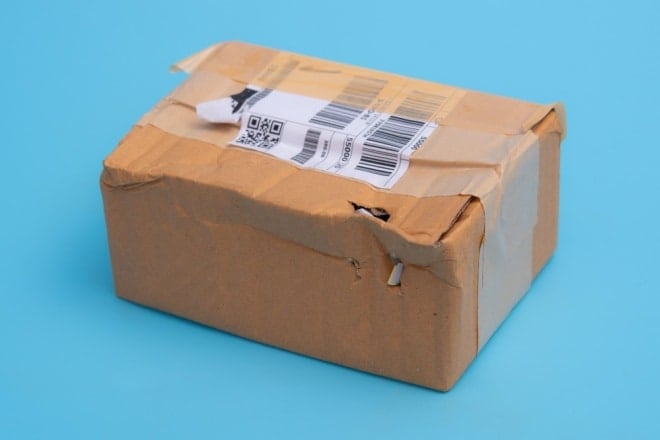
If you purchase contact lenses that arrive damaged, what's the return policy? Check before you decide where to buy.
SEE RELATED: How to buy contact lenses online
Buying contacts from a retail store
The other main option for buying contact lenses is the brick-and-mortar retail store.
Some retailers have licensed optometrists on-site for easy availability of eye exams and can have more extended hours of operation compared with a private eye doctor’s office.
While pricing is often competitive, the selection of lenses in stock and ready for immediate pickup may be limited in some cases. If the retailer doesn't have exactly what you need in stock, you can always order your contacts online after your exam.
Still, the combination of professionalism, convenient hours and in-person service makes retail stores an ideal place to buy contacts for many people.
Do you have vision insurance?
Insurance benefits can be an important factor when choosing an ideal place to buy contacts.
If you’re covered by a vision plan, check the details of your benefits before choosing where to buy your lenses. Your policy could offer significant savings at specific locations.
The bottom line on buying contacts
When you're researching an ideal place to buy contacts, be sure to consider all three components of the value equation: price, convenience and service.
No matter where you decide to buy — online, from your eye doctor or at a retail store — be sure to have your eyes checked on a regular basis. With smart shopping and proper eye care, your contact lens-wearing experience can be both economical and beneficial for your eyes.
[Download the PDF version of "10 Tips for Getting the Best Price"]