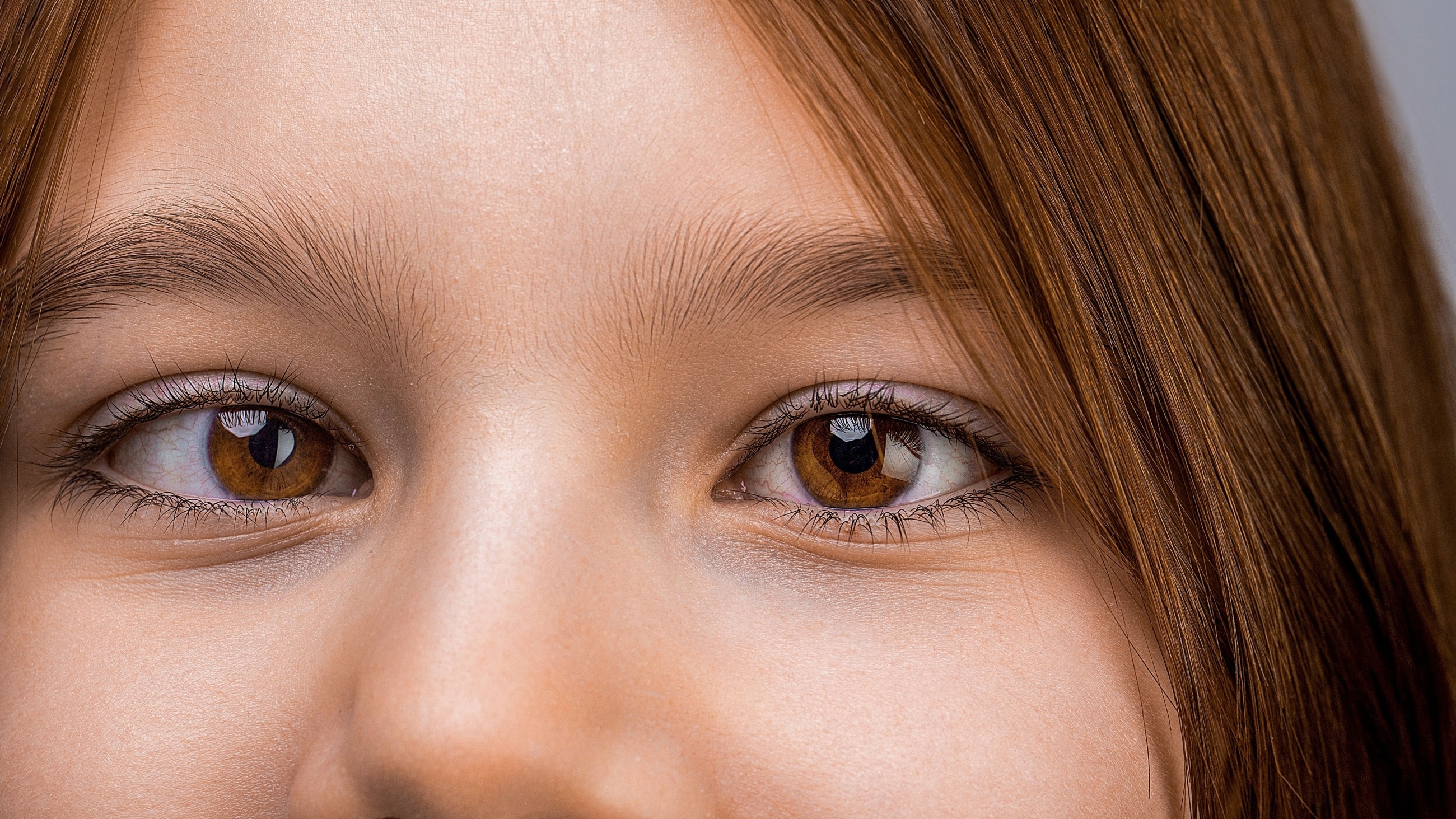
Q: My 2-year-old daughter has strabismus. Her pediatric ophthalmologist recommended strabismus surgery because glasses didn't straighten her eyes. Will her eyes be perfectly aligned after surgery?
A: In general, if a child older than 6 months has strabismus, the eyes are unlikely to be perfectly aligned again. Strabismus surgery can improve alignment substantially in many cases. But don't expect perfection.
Keep in mind that she may need one, two or even more procedures over the next decade to keep her eyes in the best possible alignment.
Q: Is the eye removed from the socket during strabismus surgery?
A: No. In strabismus surgery, the eye surgeon makes a small incision in the conjunctiva, the outer covering of the sclera of the eye, to access the extraocular muscles that control eye alignment and movement.
Q: It seems that my son's right eye is usually turned out, but our ophthalmologist recommends surgery on both eyes. Why is this?
A: Eyes are aligned relative to one another. For example, in a child with esotropia (inwardly turned eyes), the left eye is turned in when the right eye fixates on a target. If the left eye fixates on a target, the right eye is turned in. Therefore, in most strabismus cases both eyes are involved.
This is why surgery usually is performed on both eyes. In some cases, if one eye is primarily turned and is also amblyopic (a lazy eye), the surgeon may perform surgery only on that eye.
Q: How does the eye surgeon know how much surgery to do for my son who has strabismus?
A: Eye surgeons measure the deviation of the eyes before surgery and consult a nomogram — a standard of comparison based on the surgical outcomes of thousands of patients — to determine how far to recess (move) or resect (reattach) each individual muscle.
Generally this is a very accurate approach. However, many surgeons advise patients that they may have as high as a 30 percent likelihood of needing a second operation to align the eyes better.
Q: Will my daughter need an eye patch after strabismus surgery?
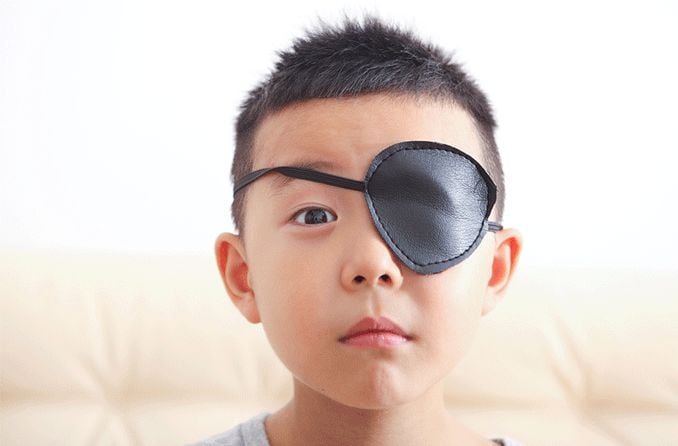
A: Generally it is not necessary to patch the eyes immediately after strabismus surgery.
If your daughter has amblyopia (a lazy eye) before strabismus surgery, she still may need patching after the procedure. However, ophthalmologists usually attempt to resolve amblyopia before strabismus surgery.
If your daughter has never had amblyopia, it is unlikely that she will need patching after strabismus surgery.
Keep in mind that strabismus surgery does not improve or treat amblyopia. Only correct eyeglasses and methods such as patching or atropine dilating eye medication can correct amblyopia.
Q: My 7-year-old son needs strabismus surgery for esotropia. Should our medical insurance cover this surgery, or is it considered cosmetic?
A: Strabismus surgery is rarely considered purely cosmetic, so your insurance plan should cover it. Ask your ophthalmologist's office to pre-approve the procedure with your insurance carrier, just to be certain.
The greatest functional benefit of strabismus surgery is improved binocularity, or use of the eyes together. However, it is possible that the procedure would be considered purely cosmetic for a completely blind eye.
Q: I'm 63 years old and have a 6th cranial nerve palsy with double vision. My left eye won't turn outward.
My ophthalmologist recommended a Botox injection to counteract this.
How does Botox work? Is it dangerous? How long will the effect last?
A: Botox is the brand name for botulinum toxin, which is produced by the bacteria Clostridium botulinum. The drug weakens muscles temporarily.
Your eye surgeon may inject Botox into the medial rectus eye muscle (inward turning), which opposes the action of the lateral rectus muscle (outward turning) — controlled by the 6th cranial nerve.
When the medial rectus muscle is weakened, your eye may return to a more natural position, and your double vision may resolve or improve to the point that prisms may be placed in a pair of glasses to fine-tune the effect.
Botox injections usually last a few weeks to a few months and may last until your 6th cranial nerve recovers.
Botox is extremely safe and effective, and surgeons in many specialties have used it for many years.
Q: Are there any risks of strabismus surgery?
A: All surgery carries risks. The main risks of strabismus surgery are undercorrection and overcorrection. There are very small risks of infection, bleeding and excessive scarring. Fortunately, complications that may lead to vision loss are extremely rare.
Please note: If you have an urgent question about your eye health, contact your eye care practitioner immediately. This page is designed to provide general information about vision, vision care and vision correction. It is not intended to provide medical advice. If you suspect that you have a vision problem or a condition that requires attention, consult with an eye care professional for advice on the treatment of your own specific condition and for your own particular needs. For more information, read our Terms of Use.