
Q: My doctor told me my astigmatism isn't advanced enough to wear contacts, but I feel like I depend strongly on my glasses. Are there astigmatism contact lenses for someone like me whose astigmatism isn't so bad? My doctor seems to be against contacts in general. — J.E., Texas
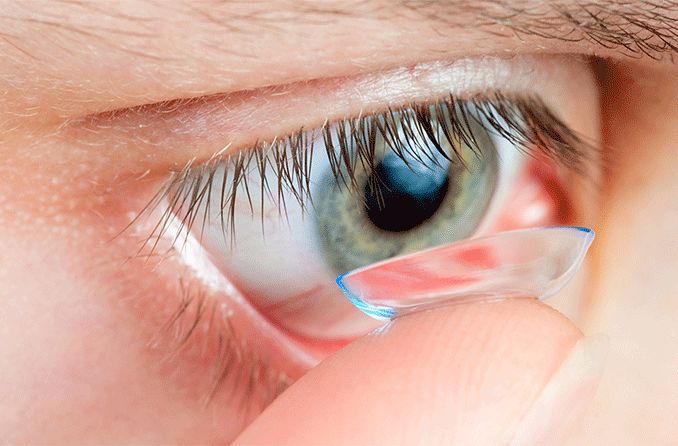
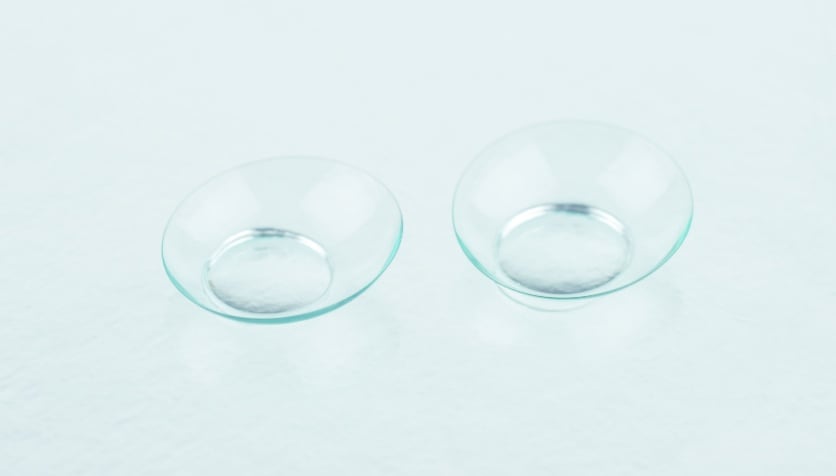
A: The best types of contact lenses for people with mild astigmatism often are either rigid gas permeable contact lenses (also called GP lenses) or hybrid contact lenses (lenses with a GP center surrounded by a soft peripheral zone). Both GP and hybrid contacts often provide sharper vision for mild astigmatism than soft lenses. If you are highly motivated to wear contact lenses, I encourage you to visit an eye doctor who specializes in fitting these lenses for a consultation. — Dr. Heiting
Q: I've worn toric contact lenses for astigmatism for several years, but I've always had the problem of the contacts rotating out of focus. Is this common? Is there anything that can correct this problem? — N.P., North Dakota
A: There are many, many brands of soft toric lenses, each with its own material, design and features. It is highly probable you can get toric soft lenses that do not rotate and go out of focus.
Perhaps you have to find a contact lens specialist. You might want to visit the websites of contact lens manufacturers such as Alcon, Bausch + Lomb, CooperVision and Johnson & Johnson Vision Care for help finding an eye doctor who specializes in toric lenses. — Dr. Dubow
Q: My father has a stigmatism and wears bifocals. Is there any chance he could ever wear contacts? — B.J.E., Florida
A: Absolutely. There are many types of rigid gas permeable contacts and soft toric contact lenses that correct astigmatism (the condition is called "astigmatism" not "stigmatism" but you're certainly not alone in making this mistake). While wearing these contacts, he can then use reading glasses on a part-time basis when needed (rather than wearing bifocals full-time) to correct his presbyopia.
If he doesn't like the idea of reading glasses, a common technique is to prescribe contact lenses so one eye takes the lead at distance and the other eye at near. This is called monovision, and it is very successful with most patients. A number of U.S. presidents have worn monovision contact lenses.
Another option is bifocal contacts that correct astigmatism. Though this is the most expensive method to correct both astigmatism and presbyopia with contact lenses, these lenses could give him the greatest freedom from glasses and the best vision overall.
Tell your dad to see his eye care practitioner for more information and to determine if he is a good candidate for contact lens wear. — Dr. Dubow
Q: I used to wear contacts about eight years ago and had to wear the ones to correct astigmatism. Now I want to wear them again, but the ones I need are much more expensive.
Why can't I just wear plain old contacts? Wearing my glasses isn't correcting my astigmatism anyway, so what's the big deal? — S.D.B., Texas
A: If you have astigmatism and wear "plain old contacts," you'll probably see really blurry. Glasses don't "correct" astigmatism, they compensate for it. And so do toric contact lenses. It's all a matter of clarity.
Blur won't harm your eyes, but don't you want to see well? Your vision is worth the extra expense! — Dr. Dubow
Q: I have had a pterygium removed twice from one eye, and I have another one on my other eye. The scar tissue has made my astigmatism worse. What are the possibilities of wearing contacts, and what kind would be the best? — D.H., Texas
A: Contact lenses are a possibility, but it depends on the amount and characteristics of your astigmatism. Corneal scarring from pterygia sometimes can cause irregular astigmatism that cannot be fully corrected with contact lenses. — Dr. Slonim
When considering contacts for hard-to-fit eyes, such as eyes with irregular astigmatism and/or corneal scarring, most eye doctors recommend rigid gas permeable (RGP or GP) contact lenses. Other options that can produce excellent results on eyes with distorted corneas include custom contact lenses and extra large GP lenses called scleral contacts. — Dr. Heiting
Q: My 12-year-old daughter just started wearing contacts for astigmatism three days ago. Today she informed me she was having trouble focusing on her phone after seven hours of wearing her contacts.
Her ability to focus on distant objects seems okay, other than occasional blurring when blinking and switching from far focus to near focus. What could be causing this problem? — T.C., Oklahoma
A: Sometimes blurry vision up close in a young contact lens wearer is simply caused by dry eyes. Studies show we blink less frequently when concentrating on something up close (like a smartphone screen), and this can cause dry eyes, dry contacts and blurry vision. And if your eyes get dry when wearing toric soft contacts for astigmatism, this can cause the lenses to rotate out of alignment when looking at things up close, causing focusing problems.
Schedule a visit with the eye doctor who prescribed the lenses (preferably later in the day, after your daughter has worn her lenses for several hours) to see what is going on. Sometimes changing to a different multipurpose solution can help keep contacts remain moist and comfortable longer, but don't change contact lens solutions without consulting your eye doctor.
Sometimes just blinking more frequently and taking short breaks from texting and computer use is all that's needed to keep things clear. — Dr. Heiting
Q: Are there contact lenses for astigmatism that I can sleep in? My wife has the convenience of sleeping in contacts, but she does not have astigmatism like I do. — Rob, North Carolina
A: Heaven forbid that your wife should see more than you do upon awakening!
Anyway, you're in luck — there are several brands of extended wear contact lenses for astigmatism that are approved by the FDA for overnight wear, including Acuvue Oasys for Astigmatism (Johnson & Johnson), Air Optix for Astigmatism (Alcon) and PureVision Toric (Bausch + Lomb). There also are rigid gas permeable contact lenses for overnight wear that correct astigmatism.
I recommend rinsing your eyes with saline before going to sleep and upon waking, to get rid of the debris and bacteria that can accumulate on and under your lenses. This helps prevent problems.
It is very important to work with a skilled eye care practitioner when wearing extended wear contact lenses — there is more risk when you sleep in lenses. However, done properly, it is great to be able to wake up and see.
Just remember... you will be seeing your wife very clearly first thing in the morning... are you sure you really want to? Just kidding, honey... ouch!... ouch! — Dr. Dubow
Please note: If you have an urgent question about your eye health, contact your eye care practitioner immediately. This page is designed to provide general information about vision, vision care and vision correction. It is not intended to provide medical advice. If you suspect that you have a vision problem or a condition that requires attention, consult with an eye care professional for advice on the treatment of your own specific condition and for your own particular needs. For more information, read our Terms of Use.