10 tips for buying kids' eyewear
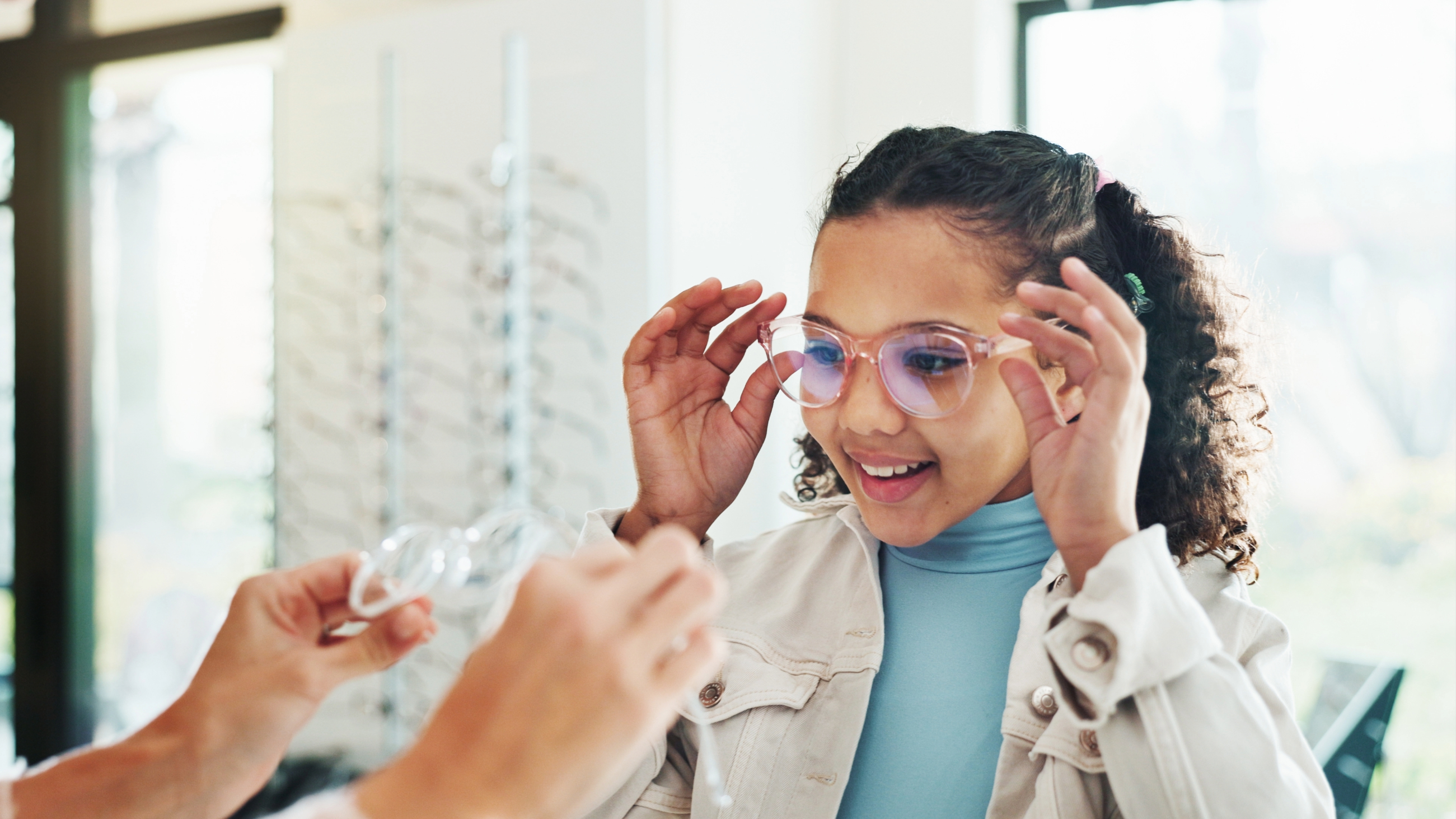
If you're a parent in search of the right pair of eyeglasses for your child, you probably know that walking into an optical store can be confusing.
There is no shortage of children's eyeglasses. The problem is figuring out which glasses your child will be willing to wear — and will they last longer than the ride home?
Here are 10 shopping tips to help you choose glasses your child will love and that will be stylish and durable.
1. How thick will the lenses be?
The eyeglass prescription is always the primary consideration in choosing glasses. Before you start looking for the frames, consult with your eye doctor or optician about your child's lenses.
If the prescription calls for strong lenses that are likely to be thick, avoid large frames that will increase the thickness of the lenses. Also, smaller lenses tend to have fewer higher-order aberrations near the edge of the lens than large lenses of the same material and prescription, so there is less risk of blurred or distorted peripheral vision.
2. Choose a modern, flattering style
Most kids will be self-conscious wearing glasses for the first time. So choose frames that have a modern, flattering style. Also, features like photochromic lenses that darken automatically in sunlight outdoors may help inspire your child to want to wear glasses.
3. Plastic or metal?
Children's frames are usually made of either plastic or metal and many have styles that intentionally mimic unisex eyeglass frames designed for adults. Kids often are attracted to these styles because they look more grown-up. It's not unusual for kids to choose glasses that look like those worn by their older siblings or their parents.
In the past, plastic frames were a better choice for children because they were considered more durable, less likely to be bent or broken, lighter in weight and less expensive. But now, manufacturers are making metal frames that incorporate these features as well. Metal composition varies, so ask the optician which one is best for your child, based on experience with different alloys.
Choose frames made of hypoallergenic materials if your child has shown sensitivity to certain substances. For example, some people are allergic to metal frames that contain nickel.
4. Proper bridge fit
One of the toughest parts about choosing suitable frames for young children is that their noses are not fully developed, so they don't have a bridge to prevent plastic frames from sliding down. Metal frames, however, usually are made with adjustable nose pads, so they can fit anyone's bridge.
Most manufacturers recognize this difficulty with plastic frames and make some bridges to fit small noses.
Each frame must be evaluated individually to make sure it fits the bridge. If any gaps exist between the bridge of the frame and the bridge of the nose, the weight of the lenses will cause the glasses to slide, no matter how well the frame seems to fit before the lenses are made.
It's important that the glasses stay in place; otherwise kids tend to look over the top of the lenses instead of pushing their glasses back up where they belong. An optician usually is the best judge of whether a frame fits properly.
5. The right temple style
Temples that wrap all the way around the back of the ear help keep glasses from sliding down or dropping off a child's face completely.
These wraparound temples, called "cable temples," generally are available on metal frames and are especially helpful to keep glasses in place on toddlers. Another option is a frame that includes an elastic strap that goes around the head.
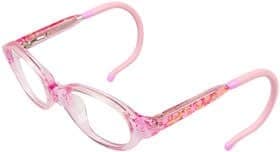
For babies and toddlers, cable temples that wrap snugly around the ears can help hold eyeglasses in place.
6. Spring hinges
A nice feature to look for is temples with spring hinges. These allow the temples to flex outward, away from the frames, without causing any damage.
Kids aren't always careful when they put on and take off glasses, and spring hinges can help prevent the need for frequent adjustments and costly repairs. They also come in handy if the child falls asleep with the glasses on or just has a rough day at play.
Spring hinges also are often strongly recommended for toddlers, who sometimes get carried away playing with their new glasses.
7. Lens material
Once you and your child agree on frames that you both like, the next consideration is the lenses.
Children's lenses should be made of polycarbonate or specialized polyurethane-based material. These materials are more impact-resistant than other lens materials for added safety.
Polycarbonate and specialized polyurethane-based lenses also are significantly lighter than regular plastic lenses, which typically makes the glasses more comfortable — especially for strong prescriptions.
And polycarbonate and specialized polyurethane-based lenses have built-in protection against potentially damaging ultraviolet (UV) rays, and the lenses are typically scratch-resistant coated by the manufacturer or fabrication lab.
The price for polycarbonate lenses generally is comparable to the cost for regular plastic lenses with UV and scratch-resistant coatings. And with polycarbonate, kids get that extra margin of safety to protect their eyes. Specialized polyurethane-based lenses may cost a little more than polycarbonate lenses.
Avoid choosing glass lenses for children's eyeglasses. Although they are very scratch resistant, glass lenses are very heavy and can break relatively easily (compared with polycarbonate or specialized polyurethane-based lenses).
8. Sports glasses
Polycarbonate is such a safe lens material that you may be tempted to let your child play sports in their regular glasses.
Here's the drawback: Although polycarbonate is the lens material often used for sports eyewear, regular eyeglass frames do not provide enough protection from large objects such as balls and flying elbows.
So if your child is involved in sports, a proper sports goggle with polycarbonate lenses will provide the best protection against eye injury.
To provide optimum protection, sports goggles must be fitted properly — so consult with an eye care professional before purchasing them. The lens openings of sports goggles should be large enough so if the goggles are pushed toward the face, the impact points are above and below the eyes to avoid eye injuries.
9. Warranties
Many optical retailers offer a warranty plan that will replace eyewear at no charge or for a small fee in case of damage to the frames or lenses. Consider opting for the warranty, especially if your child is a toddler or is wearing glasses for the first time.
Check lens replacement costs with and without the warranty plan. Generally, if the warranty costs you less or about the same amount as the fee to replace one single lens, it is worth the price.
Make sure the lens warranty includes a replacement provision if the lenses become badly scratched from normal wear. In addition to causing glare and blurred vision, surface scratches can compromise the impact resistance of eyeglass lenses, putting your child's eyes at risk.
10. Purchase a "backup pair"
Because children can be tough on their glasses, it may be a good idea to purchase a second, or backup, pair of eyeglasses for them — especially if your child has a strong prescription and cannot function without their glasses.
Ask your optician if special discounts apply for second pairs — they may if the backup pair is purchased at the same time as the primary pair.
In some cases, sports goggles can be used as a spare pair of glasses. Or, if your child's prescription has not changed significantly, keep his or her previous eyeglasses in a safe place for use as a spare.
If your child wears glasses full-time, photochromic lenses or prescription sunglasses also should be considered to decrease glare, increase visual comfort and provide 100% protection from the sun's harmful UV rays.
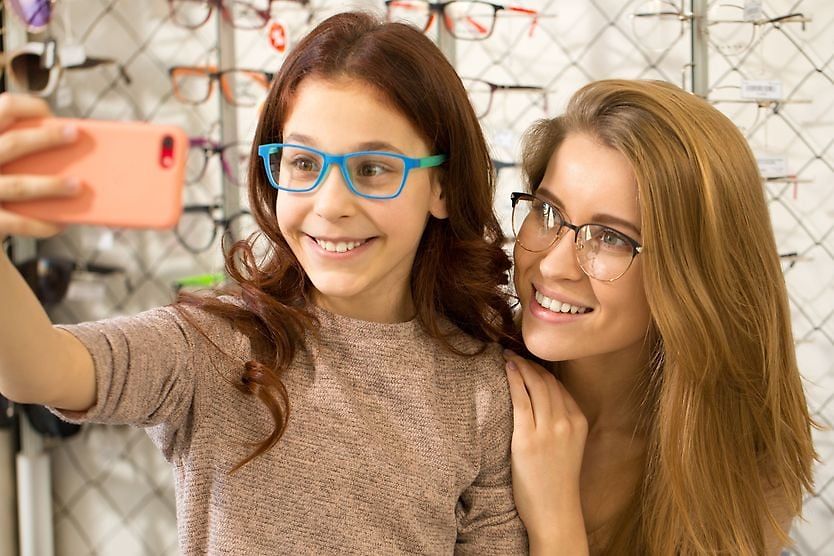
Fun colors and patterns make new frames particularly appealing.
First step: An eye exam
Before purchasing eyewear for kids, schedule a comprehensive eye exam for your child with an eye doctor near you.
Children's eyes can change rapidly, so make sure your child has an up-to-date eyeglass prescription for the best possible vision and comfort before investing in new glasses.