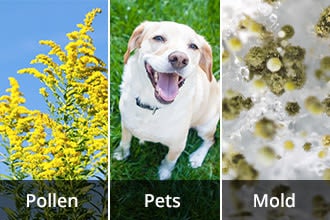
To get relief from your eye allergies and itchy, watery eyes, you can take a few approaches:
Avoid allergens
The best approach to controlling your eye allergy symptoms is to do everything you can to limit your exposure to common allergens that you know you are sensitive to.
For example, on days when the pollen count is high, stay indoors as much as possible, with the air conditioner running to filter the air. Use high quality furnace filters that can trap common allergens and replace the filters frequently.
When you do go outdoors during allergy season, wear wraparound sunglasses to help shield your eyes from pollen, ragweed, etc., and drive with your windows closed.
Remove your contacts
Because the surface of contact lenses can attract and accumulate airborne allergens, consider wearing glasses instead of contacts during allergy season. Or consider switching to daily disposable contacts that you discard after a single use to avoid the buildup of allergens and other debris on your lenses.
Often, the best choice if allergies are bothering your eyes is to discontinue wearing contacts altogether — at least until all your allergy symptoms are gone. Also, wearing eyeglasses with photochromic lenses can reduce allergy-related sensitivity to light and can help shield your eyes from airborne allergens.
Use eye drops
Because eye allergies are so common, there are many brands of non-prescription eye drops available that are formulated to relieve itchiness, redness and watery eyes caused by allergies.
If your eye allergy symptoms are relatively mild, non-prescription eye drops for allergy relief may work very well for you and may be less expensive than prescription eye drops or other medication. Ask your eye doctor to recommend a brand to try.
Ask about prescription medications
If your allergy symptoms are relatively severe or over-the-counter eye drops are ineffective at providing relief, you may need your eye doctor to prescribe a stronger medication.
Prescription eye drops and oral medications used to relieve eye allergies include:
Antihistamines
Part of the body's natural allergic response is the release of histamine, a substance that dilates blood vessels and making the walls of blood vessels abnormally permeable.
Symptoms caused by histamine include a runny nose and itchy, watery eyes.
Antihistamines reduce allergic reactions by blocking the attachment of histamine to cells in the body that produce an allergic response.
Decongestants
Decongestants help shrink swollen nasal passages for easier breathing. They also reduce the size of blood vessels on the white (sclera) of the eye to relieve red eyes.
Common decongestants include phenylephrine and pseudoephedrine. Combination drugs are available that contain both an antihistamine and a decongestant.
Mast cell stabilizers
These medications cause changes in histamine-containing cells located in tissues throughout the body, including the conjunctiva of the eye and eyelids that prevent them from releasing of histamine and related mediators of allergic reactions.
Because it may take several weeks for the full effects of mast cell stabilizers to take effect, these medications are best used before allergy season starts as a method to prevent or reduce the severity of future allergic reactions (rather than to treat acute allergic symptoms that already exist).
Non-steroidal anti-inflammatory drugs
Also called NSAIDs, these eye drops can be prescribed to decrease swelling, inflammation and other symptoms associated with seasonal allergic conjunctivitis (also called hay fever).
Steroids
Corticosteroid eye drops are sometimes prescribed to provide relief from acute eye allergy symptoms. But potential side effects of long-term use of these medications include high eye pressure, glaucoma and cataracts, so they typically are prescribed for short-term use only.
Inquire about immunotherapy
If none of the above measures are effective, ask your doctor about immunotherapy. This is a treatment where an allergy specialist injects you with small amounts of allergens to help you gradually build up immunity and thereby decrease allergic reactions.
Eye allergies and contact lenses

Red, itchy, watery eyes are the distinctive signs and symptoms of allergies.
Contact lens discomfort is a common complaint during allergy season, leading some wearers to question whether they are becoming allergic to contact lenses.
The issue of being allergic to contacts also comes up from time to time when a person starts wearing silicone hydrogel contact lenses after successfully wearing standard soft (hydrogel) contact lenses and experiences allergy-like symptoms.
Studies have shown that the culprit behind eye allergies associated with contact lens wear is not an allergic reaction to the contact lens itself, but to substances that accumulate on the surface of the lenses.
In the case of switching from regular soft contacts to silicone hydrogel lenses, the surface and chemical characteristics of the lens material may attract lens deposits more readily than the previous lens material, causing discomfort.
SEE RELATED: Acuvue Debuts Medicine-releasing Contact Lenses
Visit an eye doctor
Many eye doctors believe the best type of soft contact lenses for people prone to eye allergies are daily disposable lenses that are discarded after a single use, which decreases the buildup of allergens and other debris on the lens surface.
Silicone hydrogel often is the preferred lens material for these lenses, because it allows significantly more oxygen to pass through the lens, compared with conventional soft contact lens materials.
The only way to know for sure if you have eye allergies and to get the best treatment advice is to see an eye doctor for a comprehensive eye exam.
THINK YOU HAVE EYE ALLERGIES? Find an eye doctor near you.