Sports sunglasses control light, boost performance

Sports sunglasses could give an edge to athletes at all levels, including amateur "weekend warriors" who always are looking for ways to improve their performance in the sports they love.
But in their rush to try the latest and greatest gear, such as new tennis racquets or shoes, many sports enthusiasts overlook a key factor in optimizing their sports performance — their vision.
Sport Sunglasses Manage Light For Better Performance
Vision is, of course, about how we process light to create the images we see.
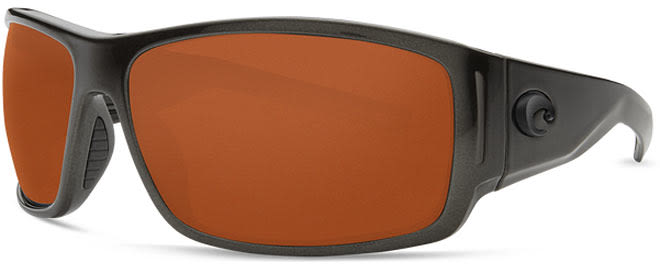
Styles by Costa. Each has vented temples and comes in a variety of frame colors and lens tints.
All light, including outdoor sunlight, is composed of a variety of electromagnetic rays of different colors, determined by their wavelengths. Rays of violet, blue, green, yellow, orange and red light each have a specific wavelength, depending on color. When combined, these colored rays create white light.
When transmittance of certain wavelengths into the eye is selectively reduced, tinted performance sunglasses can diminish glare and enhance contrast sensitivity.
With this ability to see with greater speed, accuracy, clarity and comfort, the athlete may have a key advantage over competitors.
This extra edge of better vision with sports sunglasses can manifest itself in different ways, depending on the sport. In golf, for example, tinted lenses can enhance contrast between light and dark patterns of the grass on greens, enabling you to "read" greens better for more accurate putting.
Other examples:
In tennis, softball and baseball, tinted lenses can help you see the rotation of the ball more clearly so you can make better contact with your racquet or bat.
For biking, sunglasses with the appropriate lenses may help you see better down the road or trail for a safer ride, especially when traveling downhill at high speeds.
How To Choose A Sunglass Tint
To some degree, selecting a tint is a matter of personal preference. However, certain tints offer advantages for specific visual tasks and environments.
If 100 percent accuracy in color perception is key, a neutral gray tint is the best choice.
But for most athletes, contrast enhancement is the most desired feature for activities such as viewing a ball against the sky, a fish under the water, upcoming moguls on a ski slope or for a variety of other sports-specific tasks. To enhance contrast, brown and copper-colored tints are often best.
Depending on lighting conditions, yellow (for low-light and overcast conditions), amber, orange and red tints also are good choices for contrast enhancement.
For a list of lens colors and potential uses, see our Sunglass Lens Tint Guide.
Lens Tints And UV Protection
If you're into sports, you probably spend more time in the sun than the average person. So make sure your sunglasses offer 100 percent UV protection. Lifelong overexposure to ultraviolet (UV) rays has been linked to the development of cataracts later in life.
The amount of UV protection offered by sunglass lenses is determined by the lens material and coatings or additives applied to the lens.
Therefore, the color and darkness of a sunglass tint are not reliable indicators of its ability to shield your eyes from ultraviolet (UV) radiation. It's possible for a light yellow lens to offer 100 percent UV protection and for a dark gray lens, depending on its quality, to offer little or no protection.
A good choice for sports sunglasses is polycarbonate lenses. These lenses are lightweight and shatter-resistant, and they block 100 percent of the sun's harmful UV rays without extra additives or coatings.
Sunglasses can also filter some high energy visible (HEV) radiation from the sun — sometimes called "blue light" — in addition to UV rays. Although many types of sunglasses are called ‘blue-blocker" sunglasses, they actually filter a portion of blue light. Many brands of these "blue-blocker" sunglasses are on the market.
Your eye doctor can help you choose sports sunglasses that block both 100 percent UV and potentially damaging HEV light.
Supercharge Tints With Other Lens Features
Although tints alone can improve your sports vision significantly by changing the quantity and quality of light entering the eye, you also may want to consider adding these performance-enhancing features to your sports sunglasses:
Mirror coatings.
For very bright conditions, such as hiking, skiing or snowshoeing at high altitudes, consider adding a mirror coating to the front surface of your sports sunglass lenses. These coatings can block an additional 10 percent to 60 percent of visible light for greater comfort in highly reflective full-sun environments.
Pro Golfers Demonstrate Advantages Of Sport Sunglasses
Australia-born professional golfer Robert Allenby, one of the first pros on the PGA tour to wear sport sunglasses during tournament play, has said that he prefers polarized copper-colored lenses with a 50 percent transmittance rating for golfing.
"Polarized lenses help take glare and shine off the green so I can see the line better... The color helps me see the definition of the grass and covers all climates and light scenarios," Allenby said in Eyecare Business magazine.
Allenby mentioned that wearing sunglasses has helped him perform better on the links by relieving the need to squint, which keeps him more relaxed.
Following Allenby's lead, many players on the PGA tour are wearing sunglasses during tournament play, including Zach Johnson, winner of the 2007 Masters Tournament.
Also, Annika Sorenstam, perhaps the best woman golfer to play the game, wore sports sunglasses during most of her tour wins before retiring. Up-and-comer Jin Young Ko also wears them during play.
How Many Pairs Of Sport Sunglasses Do You Need?
Typically, you will be best served if you have at least two different pairs of sport sunglasses for different lighting conditions.
A yellow or amber color may be best for overcast conditions, while a medium or dark brown lens may work better for sunny days. Or you may prefer different tint colors for different activities.
Some sports eyewear companies offer sunglasses with interchangeable lenses in different colors for greater versatility. Ask an optician for details.
Before you consider buying another $500 titanium driver, visit your eye doctor or an optical shop instead. A pair or two of high quality sports sunglasses may do more for your game than another expensive club in your bag!
SEE RELATED: Sports Eye Safety Month
Page published on Wednesday, February 27, 2019